
“Working hard” means you are putting in a lot of effort.
“Hardly working” means you are not working much at all.
Even though the two phrases look similar, they mean opposite thing
The phrases “working hard” and “hardly working” confuse many people because they look almost the same but mean completely different things. One phrase shows strong effort, and the other shows very little effort. That tiny change in word order can change the whole meaning of a sentence.
In school, at work, and even online, people mix up these two phrases because they sound playful and sometimes appear as jokes or memes.
This guide will make everything simple. You will learn the meaning, difference, correct usage, easy grammar tips, and examples for both phrases. Every explanation is written in clear, everyday English so even a child in class 4 can understand it easily.
By the end, you will know exactly when to use “working hard” and when to use “hardly working” in real life
1. Meaning of “Working Hard”
Working hard means putting in strong effort. It shows dedication, focus, and hard work toward a task.
- Part of speech: Verb phrase
- Simple meaning: Doing a lot of work with energy and effort.
Examples
- She is working hard to finish her homework.
- They are working hard to win the match.
- I’m working hard to improve my English.
Think of it like carrying a heavy box. You are busy. You are trying. You are giving your best.
2. Meaning of “Hardly Working”
Hardly working means doing very little work or almost no work.
It often sounds funny or sarcastic.
- Part of speech: Adverb + verb
- Simple meaning: Doing almost nothing.
Examples
- He is hardly working during class.
- We are hardly working today because it’s too hot.
- She is hardly working on her project this week.
Imagine sitting on a chair, relaxed, scrolling your phone. That is “hardly working.”
The Key Difference Between “Working Hard” and “Hardly Working”
The difference is effort.
- Working hard = a lot of effort.
- Hardly working = little or no effort.
Comparison Table
| Phrase | Meaning | Type | Example |
|---|---|---|---|
| Working hard | Doing a lot of work with effort | Verb phrase | She is working hard for her exam. |
| Hardly working | Doing very little work | Adverb + verb | He is hardly working today. |
Quick Tip to Remember
➡️ If the word “hard” comes first → it means a lot of effort.
➡️ If “hardly” comes first → it means almost none.
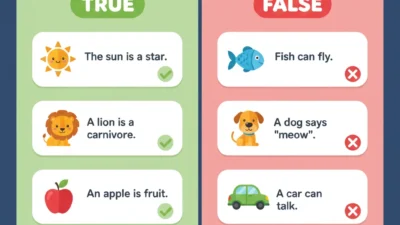
True or False Questions for Kids: The Secret They Won’t Tell
Common Mistakes and How to Avoid Them
❌ Mistake 1:
Incorrect: I am hardly working on my goals.
Correct: I am working hard on my goals.
Why? “Hardly working” means almost no effort, which is not the meaning here.
❌ Mistake 2:
Incorrect: She is working hard doing nothing.
Correct: She is hardly working; she is doing nothing.
Why? The phrase must match the level of effort.
❌ Mistake 3:
Incorrect: Are you working hard or hardly working? (Used seriously)
Correct: Are you working hard or hardly working? (Used as a joke)
Why? This phrase is usually used humorously because the meanings are opposite.
When to Use “Working Hard”
Use “working hard” when someone is putting in effort, time, or energy into a task.
Use it in situations like:
- Studying
- Job tasks
- Sports
- Chores
- Self-improvement
- Training
Example Sentences (easy & practical)
- I am working hard to save money.
- She is working hard on her science project.
- They are working hard to make the event successful.
- We are working hard to clean the house before guests arrive.
- He is working hard in the gym every day.
This phrase always shows effort and activity.
When to Use “Hardly Working”
Use “hardly working” when someone is doing little work, or almost none.
Use it in situations like:
- Slow work days
- Lazy afternoons
- Moments of distraction
- When joking about not doing much
Example Sentences
- We are hardly working today because the internet is slow.
- He is hardly working and mostly chatting.
- The team is hardly working after lunch.
- I am hardly working during the holiday season.
Memory Hack
Think of the word hardly as “almost not.”
So hardly working = almost not working.
Quick Recap: Working Hard vs Hardly Working
- Working hard = a lot of effort.
- Hardly working = almost no effort.
- The two phrases look similar but mean opposites.
- “Working hard” is positive and serious.
- “Hardly working” is funny or negative.
- Word position changes the meaning completely.
Advanced Tips (Optional but Helpful)
1. Origin
- “Hard” has been used for centuries to mean “with effort.”
- “Hardly” originally meant “barely” or “scarcely,” which is still its meaning today.
2. Formal Writing
- Working hard is acceptable in school essays or job reports.
- Hardly working is too casual.
Use it mainly in conversations or humor.
3. Online Writing
People often use the phrase “working hard or hardly working?” as a playful greeting or caption. Just remember: it’s joking, not serious.
Mini Quiz (Test Yourself!)
Fill in the blanks with working hard or hardly working:
- She is ________ on her painting; it looks great.
- We are ________ today because it’s almost holiday time.
- He is ________ to pass his exams.
- They are ________ and spending most of the time talking.
- I am ________ to finish my project before the deadline.
(Answers: 1. working hard, 2. hardly working, 3. working hard, 4. hardly working, 5. working hard)
Frequently Asked Questions (FAQs)
1. What does “working hard or hardly working” mean?
It is a playful phrase that compares doing a lot of work with doing almost none.
2. Is “hardly working” positive or negative?
It usually means “not doing much,” so it’s often humorous or negative.
3. Can I use “hardly working” in formal writing?
No, it is too casual. Use it only in speech or jokes.
4. Are “hard” and “hardly” the same?
No. Hard means “with effort.”
Hardly means “almost not.”
5. Why do people get confused?
Because the phrases look similar but mean the opposite.
Conclusion
Understanding the difference between “working hard” and “hardly working” is simple once you look closely at the meanings. One phrase shows strong effort, and the other shows almost none. By learning how each phrase works, you can avoid common mistakes and use them correctly in daily life, school, and conversations.
Keep practicing with examples and try using both phrases in your own sentences. The more you use them, the easier they become.
Good English grows with small daily steps, and today you have taken one more.