
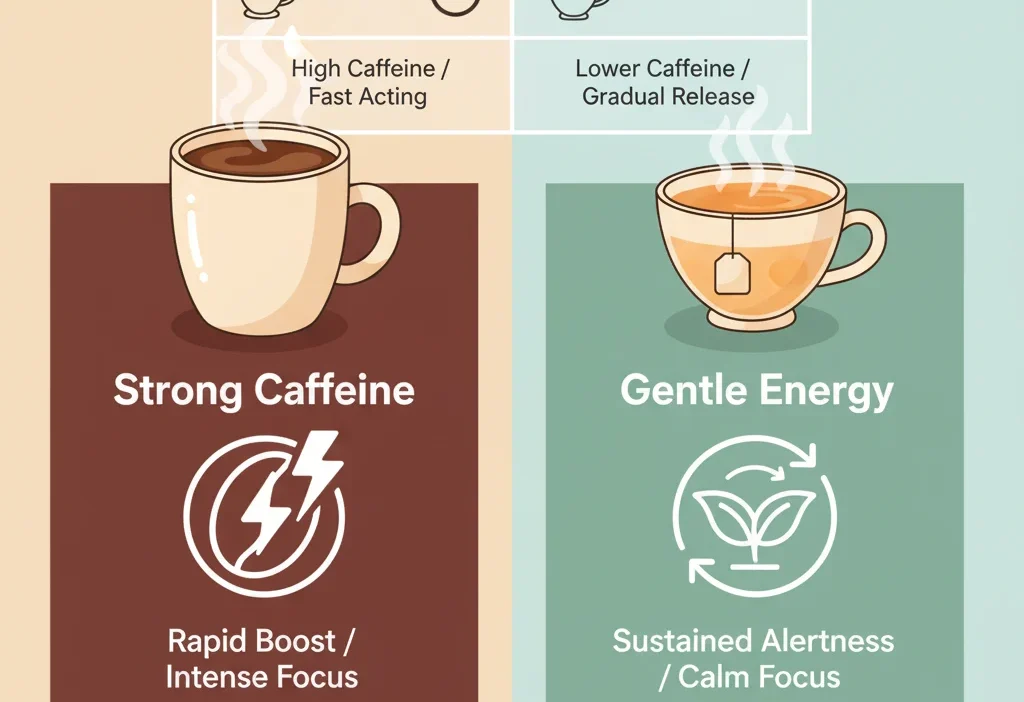
Many people love both coffee and tea. Some drink them to wake up, others just for taste or comfort. But one question always comes up: what has more caffeine — coffee or tea?
It sounds simple, but the answer depends on several things — like how you brew them, how strong the drink is, and even the type of bean or leaf you use.
In this friendly guide, we’ll explain everything clearly:
- What caffeine is and how it works
- The difference between coffee and tea in caffeine content
- Simple examples so you’ll always know which drink gives more energy
- Easy tips to remember when to choose coffee or tea
By the end, you’ll understand this topic so well that even a 4th-grader could explain it!
🧠 What Does Each Drink Contain?
Before comparing caffeine levels, let’s look at what coffee and tea actually are.
☕ Coffee — Meaning and Basics
Coffee is made from roasted coffee beans. It’s usually brewed by pouring hot water through ground beans.
Coffee contains more caffeine per cup than tea, which is why people often drink it in the morning for energy.
Part of speech: Noun (a drink made from coffee beans)
Simple examples:
- I drink coffee every morning before school.
- Dad bought a hot coffee on his way to work.
- She can’t sleep after too much coffee.
🍵 Tea — Meaning and Basics
Tea is made by soaking dried leaves (usually from the Camellia sinensis plant) in hot water.
It can be black, green, white, or herbal — and each type has a different amount of caffeine.
Part of speech: Noun (a drink made by infusing dried leaves in water)
Simple examples:
- Grandma drinks tea in the evening.
- Green tea is good for relaxing.
- I added honey to my cup of tea.
⚖️ The Key Difference Between Coffee and Tea (Caffeine Comparison)
Here’s where things get interesting!
Many people think coffee always has more caffeine than tea — but that’s only mostly true.
Let’s look at a clear comparison:
| Drink Type | Average Caffeine per 8 oz (240 ml) | Energy Effect | Common Use | Example Sentence |
|---|---|---|---|---|
| Coffee | 90–120 mg | Strong and quick energy boost | Morning wake-up | “I drink coffee before class.” |
| Black Tea | 40–70 mg | Mild energy, smoother effect | Afternoon drink | “She had black tea after lunch.” |
| Green Tea | 20–45 mg | Gentle energy, calm focus | Relaxation, study | “Green tea helps me focus.” |
| Herbal Tea | 0 mg (no caffeine) | No energy boost | Evening relaxation | “I drink chamomile tea before bed.” |
✅ Quick Tip to Remember:
“Coffee is the sprinter, tea is the marathon runner.”
Coffee gives a fast jolt of energy, while tea provides gentle, longer-lasting focus.
🚫 Common Mistakes and How to Avoid Them
Here are some common misunderstandings about caffeine in coffee and tea — and how to fix them.
| ❌ Common Mistake | ✅ Correct Understanding | 💡 Explanation |
|---|---|---|
| “Tea has no caffeine.” | Some teas (like black and green) do contain caffeine. | Only herbal teas are caffeine-free. |
| “Coffee always gives more energy.” | Depends on the type and how strong it’s brewed. | A weak cup of coffee might have less caffeine than strong black tea. |
| “Decaf coffee has no caffeine.” | “Decaf” means less caffeine, not zero. | A cup of decaf coffee still has around 2–5 mg caffeine. |
89+Ten of Pentacles Yes or No: Tarot Interpretation for You 2025
☕ When to Choose Coffee (And How to Use It Right)
Coffee is great when you need a strong boost of energy — fast.
It’s the perfect pick-me-up for sleepy mornings or long nights of studying.
When to drink coffee:
- Early in the morning before work or school
- When you feel tired or sleepy
- Before workouts for extra energy
- When you need to stay alert for a short time
Examples:
- I drink coffee to stay awake during my exam.
- She needs coffee after staying up late.
- Coffee helps me focus when I’m tired.
- We met at a coffee shop before class.
- Too much coffee can make your heart race.
Memory Hack:
“C” in Coffee stands for Charge! — it charges your energy quickly.
🍵 When to Choose Tea (And How to Use It Right)
Tea gives you a calmer, smoother kind of energy.
It’s great for relaxing, studying, or staying alert without feeling jittery.
When to drink tea:
- In the afternoon to stay focused
- When you want gentle energy
- Before bed (choose herbal tea for calmness)
- When you feel stressed or need a break
Examples:
- I sip green tea while doing homework.
- She drinks black tea in the morning.
- Herbal tea helps me sleep better.
- He likes iced tea on hot days.
- Tea keeps me calm during exams.
Memory Hack:
“T” in Tea stands for Tranquil — it helps you stay cool and calm.
🧩 Quick Recap: Coffee vs Tea
Here’s a short summary to help you remember easily:
- Coffee = More caffeine, quick energy, short effect
- Tea = Less caffeine, calm focus, longer effect
- Coffee beans are stronger than tea leaves
- Black and green teas still have caffeine — just less
- Herbal tea has no caffeine at all
In one line:
Coffee wakes you up fast; tea keeps you awake gently.
🌱 Advanced Tips and Interesting Facts
Want to sound like a caffeine expert? Here are a few fun and useful facts:
- Caffeine origin: It’s a natural compound found in coffee beans, tea leaves, and cacao plants.
- Brew time matters: Longer steeping or brewing increases caffeine content.
- Serving size counts: A small cup of strong coffee can have more caffeine than a big mug of weak tea.
- Green tea benefits: Contains L-theanine, which helps you stay focused without feeling anxious.
- Too much caffeine: More than 400 mg per day (about 4 cups of coffee) can cause restlessness or trouble sleeping.
In exams or formal writing:
If you ever write an essay about health or habits, remember to say:
“Coffee generally contains more caffeine than tea, which makes it a stronger stimulant.”
🧠 Mini Quiz: Test Your Understanding
Fill in the blanks with coffee or tea:
- _______ gives a quick burst of energy.
- Green _______ helps you stay calm and focused.
- Many people drink _______ in the morning.
- Herbal _______ has no caffeine.
- A cup of _______ before bed might keep you awake.
- Too much _______ can make you jittery.
- I love the smell of freshly brewed _______.
(Answers: 1. Coffee, 2. Tea, 3. Coffee, 4. Tea, 5. Coffee, 6. Coffee, 7. Coffee)
❓ FAQs
1. What has more caffeine — coffee or tea?
Coffee usually has about twice as much caffeine as black tea, and nearly four times more than green tea.
2. Which tea has the most caffeine?
Black tea has the most caffeine among teas, followed by green tea, then white tea.
3. Can tea keep me awake like coffee?
Yes, but in a gentler way. Tea helps you stay alert without feeling restless.
4. Is decaf coffee caffeine-free?
No. It still contains a small amount — about 2–5 mg per cup.
5. Which is healthier: coffee or tea?
Both have health benefits! Coffee helps with alertness and metabolism, while tea has antioxidants that help reduce stress.
🌄 Conclusion
So, what has more caffeine — coffee or tea?
The simple answer: Coffee usually has more caffeine, but the type and strength of your drink can change everything.
Drink coffee when you need a quick energy kick.
Choose tea when you want calm focus or relaxation.
Whether you’re a tea lover or a coffee fan, both drinks can fit perfectly into your day — it just depends on what kind of energy you want.
☕🍵 Keep learning, keep sipping, and enjoy your English (and caffeine) journey!