When back pain strikes, most people rush to their medicine cabinet wondering: Should I take Tylenol or Ibuprofen?
It’s one of the most common questions doctors hear — and for good reason! Both medicines help reduce pain, but they work in completely different ways.
In this guide, you’ll learn what each medicine does, the difference between Tylenol and Ibuprofen, how to use them safely, and which is better for your kind of back pain.
By the end, you’ll know exactly which one to reach for — easily, safely, and confidently.
What Does Each Medicine Mean?
Let’s start by understanding the basics.
Tylenol (Acetaminophen)
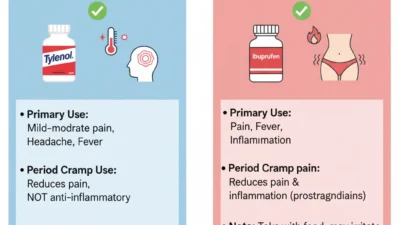
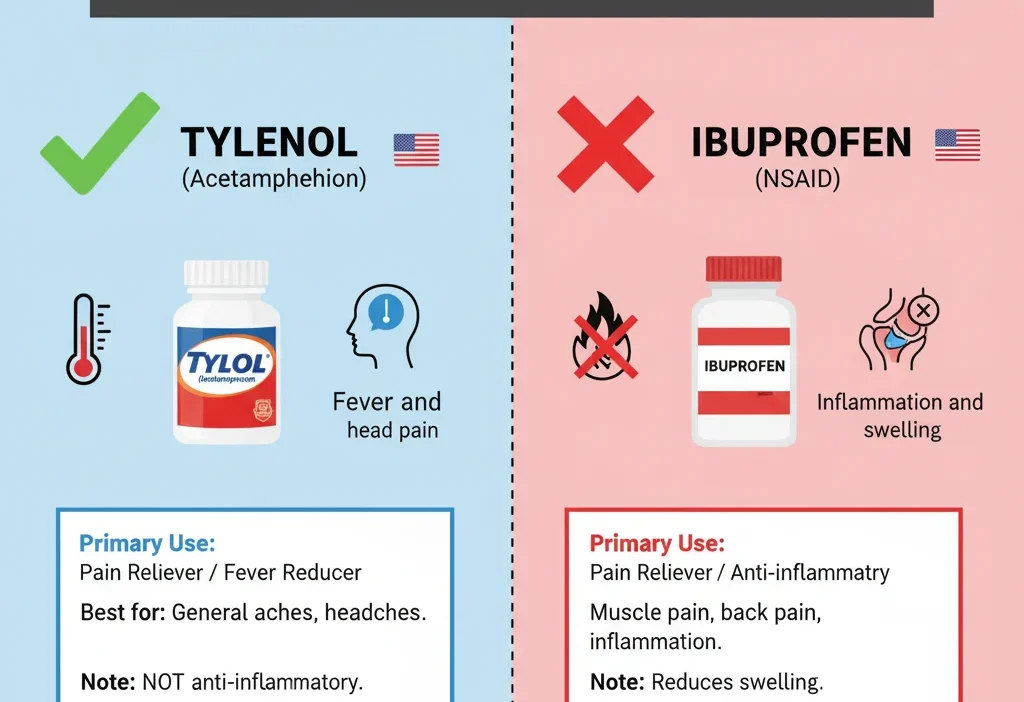
Tylenol is the brand name for acetaminophen. It’s a pain reliever and fever reducer, but it does not reduce inflammation.
That means it’s great for mild to moderate pain, but not ideal for swelling or muscle inflammation.
Tylenol helps with:
- Headaches or migraines
- Fever
- Mild back or muscle pain (without swelling)
Simple Examples:
- I took Tylenol for my mild lower back ache.
- Mom gave me Tylenol to reduce my fever.
- Tylenol helps me when my muscles feel sore but not swollen.
Ibuprofen (Advil, Motrin)
Ibuprofen is a nonsteroidal anti-inflammatory drug (NSAID). It reduces pain, inflammation, and swelling.
That’s why it’s often better for back pain caused by muscle strain, joint inflammation, or injury.
Ibuprofen helps with:
- Back pain from strain or injury
- Arthritis and muscle inflammation
- Period cramps or joint pain
Simple Examples:
- I took Ibuprofen after lifting heavy boxes at work.
- My doctor said Ibuprofen helps reduce swelling in my back muscles.
- Ibuprofen relieved my lower back stiffness.
The Key Difference Between Tylenol and Ibuprofen
Here’s a simple table to make it clear:
| Feature | Tylenol (Acetaminophen) | Ibuprofen (Advil, Motrin) |
|---|---|---|
| Main Action | Relieves pain, reduces fever | Relieves pain, reduces fever and inflammation |
| Best For | Mild pain, headaches, fever | Muscle pain, inflammation, swelling |
| How It Works | Affects pain signals in the brain | Reduces chemicals causing inflammation |
| Overuse Risk | Liver damage | Stomach irritation, kidney issues |
| Ideal For | People with sensitive stomachs | People with back pain from muscle strain |
| Common Form | Tablets, syrup | Tablets, capsules, gel caps |
Quick Tip to Remember:
“If it’s swelling, choose Ibuprofen.
If it’s just pain, choose Tylenol.”
Common Mistakes and How to Avoid Them
- ❌ Taking both medicines together without guidance.
✅ Always ask your doctor before combining them.
Some people can alternate them safely — but only with medical advice. - ❌ Using Tylenol for inflammation-based back pain.
✅ Tylenol doesn’t reduce inflammation, so it may not help muscle or joint swelling. - ❌ Taking Ibuprofen on an empty stomach.
✅ Always take it with food or milk to protect your stomach.
When to Use Tylenol for Back Pain
Use Tylenol if:
- You have mild back discomfort (like after sleeping wrong).
- Your back hurts but doesn’t feel swollen or inflamed.
- You can’t tolerate NSAIDs (e.g., you have stomach ulcers or kidney problems).
Example Sentences:
- My lower back hurt after sitting all day, so I took Tylenol.
- Tylenol is safe for my stomach, so I use it for simple aches.
- I prefer Tylenol at night because it’s gentle and helps me rest.
- When my back pain is mild, Tylenol works just fine.
Memory Hack:
Think “T” for Tender pain — Tylenol helps tender, light pain.
When to Use Ibuprofen for Back Pain
Use Ibuprofen if:
- Your back pain comes from strain, muscle injury, or swelling.
- You feel stiffness or inflammation after exercise.
- The pain worsens when you move or bend.
Example Sentences:
- After gardening all weekend, Ibuprofen helped reduce my back swelling.
- Ibuprofen works better when my back feels tight and inflamed.
- I take Ibuprofen with food to avoid stomach upset.
- Ibuprofen is my go-to for back pain from workouts.
Memory Hack:
“I” for Inflammation — Ibuprofen fights swelling and stiffness.
Quick Recap: Tylenol vs Ibuprofen
- Tylenol = Pain & Fever Relief (No inflammation control)
- Ibuprofen = Pain, Fever, and Inflammation Relief
- Tylenol is safer for sensitive stomachs or when you can’t take NSAIDs.
- Ibuprofen is better for back pain caused by swelling or strain.
- Always follow dosage instructions on the label or from your doctor.
Advanced Tips
- Origins: Tylenol (acetaminophen) was first used in the 1950s as a safer pain reliever. Ibuprofen came later as an NSAID for pain and inflammation.
- In Essays or Medical Writing: Use the generic names — acetaminophen and ibuprofen.
- In Everyday Use: Tylenol is a better choice for gentle pain or fever, while Ibuprofen is best for swelling or injury-based pain.
- In Texts or Chats: Avoid saying “Tylenol works for all pain” — because it doesn’t help inflammation. Use them correctly for safe, effective relief.
Mini Quiz: Test Yourself!
Fill in the blanks with Tylenol or Ibuprofen:
- ________ helps when your back muscles are swollen.
- For mild, tender pain, ________ is usually enough.
- You should take ________ with food to protect your stomach.
- If you have liver issues, avoid taking too much ________.
- ________ is an NSAID that reduces inflammation.
- ________ helps reduce fever but not swelling.
- For inflammation after a workout, choose ________.
(Answers: 1. Ibuprofen, 2. Tylenol, 3. Ibuprofen, 4. Tylenol, 5. Ibuprofen, 6. Tylenol, 7. Ibuprofen)
FAQs
1. Which is better for back pain, Tylenol or Ibuprofen?
Ibuprofen is usually better for back pain because it reduces inflammation, which is often the main cause of discomfort.
2. Can I take Tylenol and Ibuprofen together?
Only if a doctor advises it. Some people alternate them safely for stronger pain relief.
3. Is Ibuprofen safe for long-term use?
No, long-term use can irritate your stomach or affect your kidneys. Always follow your doctor’s guidance.
4. Can Tylenol help with muscle swelling?
No, Tylenol does not reduce swelling — it only relieves pain and fever.
5. What’s safer for sensitive stomachs?
Tylenol is gentler on the stomach, while Ibuprofen should always be taken with food.
Conclusion
Now you know the clear difference between Tylenol and Ibuprofen for back pain.
If your pain is mild and not inflamed — go with Tylenol.
If your back pain involves swelling or muscle strain — choose Ibuprofen.
Always read the label, follow the recommended dose, and talk to your doctor if pain continues.
Improving your health starts with understanding your medicine — and now you know how to make the right choice every time!