When it comes to tarot readings, few cards spark as much curiosity as the Three of Swords. Many beginners ask, “Is the Three of Swords a yes or no card?” or “Does it always mean heartbreak?”
This guide will explain the true meaning of the Three of Swords in yes or no questions, how it differs when upright or reversed, and how to interpret it clearly in love, career, and personal readings.
By the end, you’ll easily know when this card means “yes,” when it means “no,” and how to trust your intuition when it appears.
🔮 What Does the Three of Swords Mean?
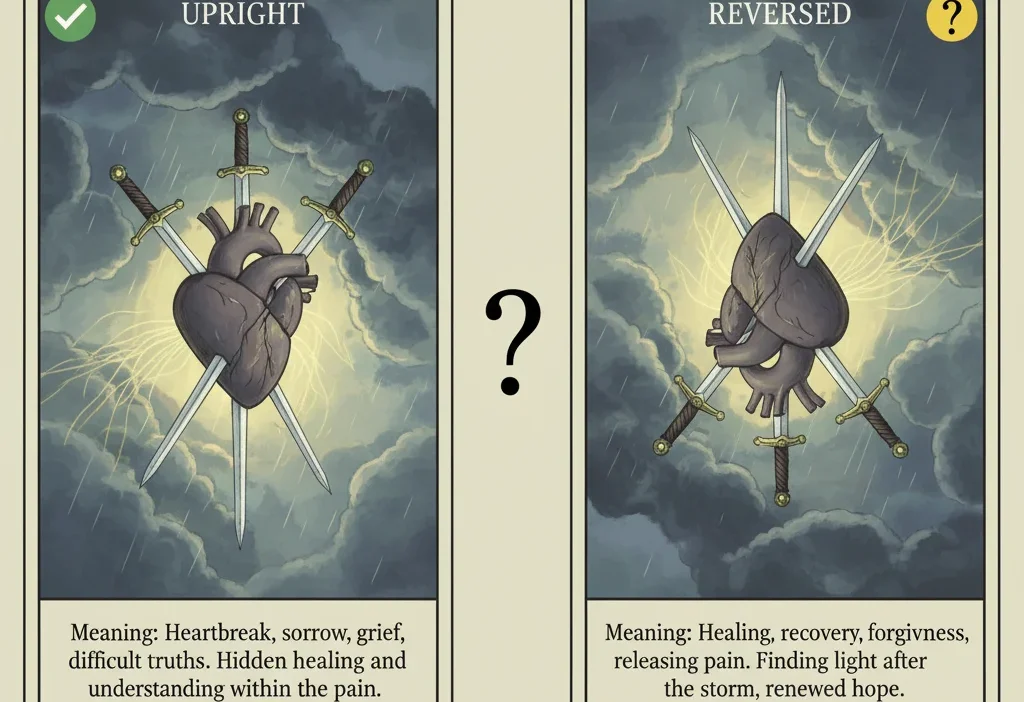
The Three of Swords is one of the most emotional cards in the tarot deck. It usually shows a heart pierced by three swords, often with rain or stormy clouds in the background.
It represents pain, heartbreak, sadness, and truth revealed. However, it’s not all bad news — this card also stands for healing and emotional clarity after hurt.
✧ Upright Meaning
When the Three of Swords appears upright, it symbolizes:
- Emotional pain or heartbreak
- Separation or conflict
- Harsh truths or realizations
- The need to release sadness
Examples:
- You find out a friend betrayed your trust — the card reflects emotional pain.
- You face a tough breakup — it mirrors heartbreak and loss.
- You realize a difficult truth — but it helps you grow.
✧ Reversed Meaning
When reversed, the Three of Swords shows:
- Recovery from heartbreak
- Forgiveness and healing
- Acceptance of truth
- Learning to move on
Examples:
- You’re finally letting go of past pain.
- You forgive someone who hurt you.
- You’re ready to rebuild your heart stronger than before.
⚖️ The Key Difference Between Upright and Reversed Three of Swords
| Aspect | Upright Three of Swords | Reversed Three of Swords |
|---|---|---|
| Meaning | Pain, heartbreak, sorrow | Healing, recovery, forgiveness |
| Emotion | Sadness, betrayal | Relief, closure, peace |
| Energy | Negative or challenging | Positive and healing |
| Yes/No Answer | No | Yes |
| Example | “Will my relationship work?” → No, emotional distance ahead | “Will I heal from this?” → Yes, you’re ready to move forward |
Quick Tip to Remember:
👉 Upright = pain before healing (No)
👉 Reversed = healing after pain (Yes)
💔 Common Mistakes and How to Avoid Them
Even experienced readers sometimes get confused when interpreting the Three of Swords yes or no meaning. Let’s clear that up with examples.
❌ Mistake 1: Thinking It’s Always Negative
Some assume this card always means “no,” but when reversed, it can show forgiveness, growth, and a strong yes energy.
✅ Fix: Look at the direction (upright or reversed) and the surrounding cards for context.
❌ Mistake 2: Ignoring the Question Type
If your question is about healing, emotional recovery, or lessons learned, even the upright Three of Swords might indicate a necessary no — meaning it’s a “no” that leads to growth.
✅ Fix: Read it as “No for now, but healing is coming.”
❌ Mistake 3: Mixing Feelings with Facts
When emotions are high, people read this card based on fear or sadness.
✅ Fix: Pause, breathe, and let intuition — not emotion — guide your reading.
💖 When the Three of Swords Means “Yes”
Although it’s usually seen as a No card, there are cases where the Three of Swords clearly says “Yes” — especially in its reversed form or when asking about recovery.
Examples of ‘Yes’ Readings:
- “Will I move on from my past heartbreak?” → Yes, healing has begun.
- “Will this situation make me stronger?” → Yes, through lessons learned.
- “Will I forgive and find peace?” → Yes, emotional balance is returning.
- “Is this pain teaching me something?” → Yes, it’s part of your growth.
- “Will things get better soon?” → Yes, but only after you let go.
Memory Hack:
Think of the reversed Three of Swords as a “bandage card.”
After the wound, healing starts — that’s your yes.
💔 When the Three of Swords Means “No”
In most upright readings, the Three of Swords points toward a firm No — especially for questions about love, trust, or reunion.
Examples of ‘No’ Readings:
- “Will my ex come back soon?” → No, not yet. There’s still pain.
- “Should I trust this person?” → No, their actions might hurt you.
- “Will this argument end well?” → No, feelings are still raw.
- “Is this relationship right for me?” → No, emotional balance is missing.
- “Should I continue in this situation?” → No, it’s time to move on.
Quick Tip:
If the card looks stormy (as it usually does), take it as the storm before the rainbow — pain now, healing later.
🧠 Quick Recap: Three of Swords Yes or No
- Upright: ❌ No — pain, separation, heartbreak
- Reversed: ✅ Yes — forgiveness, healing, peace
- In Love: Often no, unless reversed
- In Career: No for current plans, yes for future growth
- In Health: No for current state, yes for recovery soon
Simple Rule to Remember:
“If it hurts, it’s a No. If it heals, it’s a Yes.”
💬 Advanced Tips for Tarot Readers
- The Three of Swords belongs to the Suit of Swords (air element), which deals with thoughts and communication.
- Historically, it reminds readers that pain teaches truth — a lesson in emotional wisdom.
- In formal tarot spreads, it often represents the necessary heartbreak before clarity.
- Online readings may overemphasize heartbreak; in reality, it’s about emotional honesty.
- Combine it with cards like The Star or Temperance to show hope and renewal after sorrow.
✏️ Mini Quiz: Test Your Understanding
Fill in the blanks!
- The Three of Swords upright usually means a strong “_____.”
- The reversed Three of Swords stands for emotional “_____.”
- This card belongs to the Suit of “_____.”
- If the question is “Will I heal soon?” and the card is reversed, the answer is “_____.”
- The Three of Swords teaches that “Pain can lead to _____.”
(Answers: No, healing, Swords, Yes, growth.)
❓ FAQs
1. Is the Three of Swords a yes or no card?
Usually No when upright, but Yes when reversed or about healing.
2. Does the Three of Swords always mean heartbreak?
Not always — it can also mean recovery and forgiveness when reversed.
3. What does the Three of Swords mean in love readings?
It often means emotional pain, separation, or truth revealed — but healing follows.
4. Can the Three of Swords mean yes for career questions?
Only if you’re learning from past setbacks or ready for change.
5. How should beginners interpret this card?
Keep it simple: Upright = pain or “No.” Reversed = healing or “Yes.”
🧘 Conclusion
The Three of Swords reminds us that pain isn’t permanent — it’s part of growth. In yes or no tarot readings, it’s a clear No when upright, but a hopeful Yes when reversed.
Remember, even heartbreak brings healing. Every challenge teaches something that strengthens your heart and spirit.
Keep practicing, trust your intuition, and let every reading guide you toward clarity and peace.

Oliver Thorne is a passionate digital storyteller and content strategist at WordContrast.com. With years of experience in SEO writing and online marketing, he specializes in transforming complex ideas into clear, engaging articles. Oliver loves exploring the latest trends in technology, productivity, and digital culture—helping readers stay informed and inspired in today’s fast-moving world.