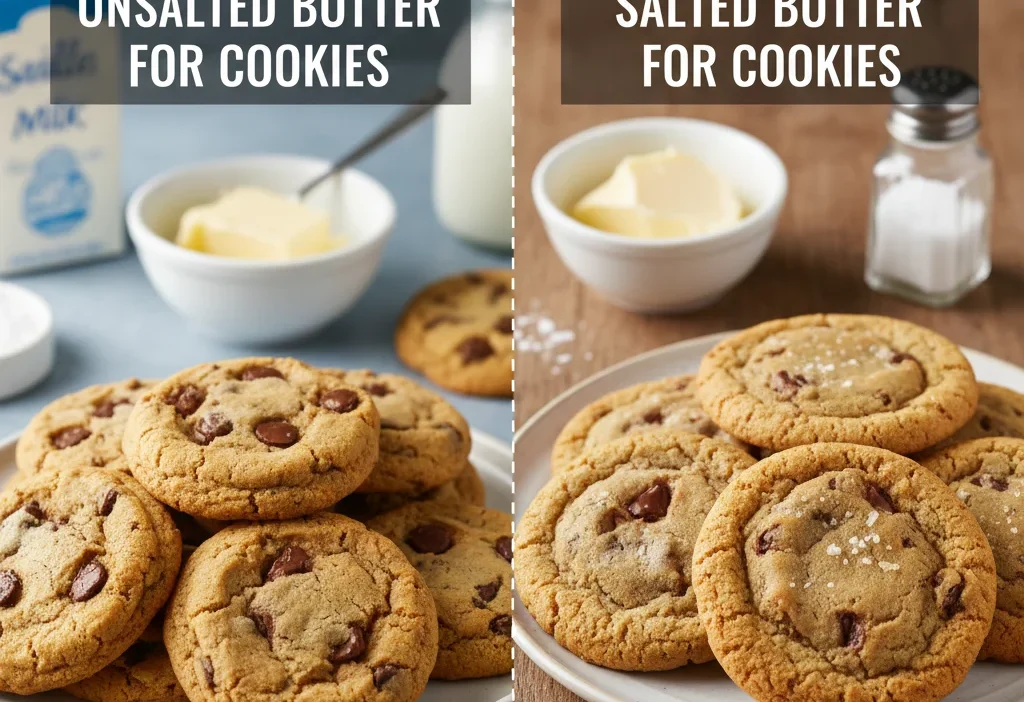
Use unsalted butter for cookies when you want full control over the flavor, sweetness, and salt level.
Use salted butter for cookies when you want quick, simple cookies with a slightly stronger buttery taste.
When baking cookies, many people get confused about whether to use salted or unsalted butter for cookies. At first, both types look the same — soft, rich, and creamy. But they behave differently in recipes, and this can change the taste of your cookies. Because of this, bakers often wonder: Which butter should I choose?
This easy guide will explain everything in simple language. You’ll learn what salted and unsalted butter mean, how they taste, how they affect cookies, and when to use each one. We will also show examples, common mistakes, and quick memory tricks. By the end, even a beginner or a 4th-grade student will clearly understand the difference.
Let’s make choosing the right butter easy, fun, and stress-free!
What Does Each One Mean?
What Is Salted Butter?
Salted butter is regular butter with added salt. Different brands use different amounts of salt, so the taste is not always the same.
Part of speech: Noun (a type of butter)
Easy Examples:
- I spread salted butter on my toast.
- My mom used salted butter to cook vegetables.
- Salted butter made our cookies taste a little salty.
Salted butter has a stronger flavor because the salt brings out the taste.
What Is Unsalted Butter?
Unsalted butter has no added salt. It tastes pure, creamy, and soft. Chefs love it because they can add exactly the amount of salt they want.
Part of speech: Noun (a type of butter)
Easy Examples:
- The recipe says to use unsalted butter for cookies.
- Unsalted butter helps control the flavor.
- I baked a cake with unsalted butter to avoid extra salt.
Unsalted butter gives more control in baking.
The Key Difference Between Salted and Unsalted Butter
| Feature | Salted Butter | Unsalted Butter |
|---|---|---|
| Salt Level | Has added salt | No added salt |
| Flavor | Strong, salty, bold | Mild, pure, creamy |
| Best Use | Cooking, simple baking | Baking cookies, cakes, pastries |
| Control | Harder to measure salt | Full control over salt |
| Taste in Cookies | Slightly salty cookies | Perfectly balanced cookies |
Quick Tip to Remember:
Unsalted = Under Your Control
You decide the salt. Perfect for cookies!
Common Mistakes and How to Avoid Them
Mistake 1: Using salted butter without reducing salt
❌ Wrong:
Add salted butter + 1 teaspoon salt
✔ Correct:
Use salted butter + reduce added salt
Why?
Cookies may taste too salty.
Mistake 2: Switching butter types without adjusting flavor
❌ Wrong:
Using salted butter in a recipe meant for unsalted
✔ Correct:
Reduce added salt by ¼ teaspoon per stick of butter.
Mistake 3: Thinking both butters taste the same
Salt changes flavor, color, and spread. Cookies may spread more or taste different.
When to Use Salted Butter (With Examples)
Use salted butter when:
- You want a quick recipe
- You don’t mind a slightly salty taste
- You are NOT following a strict baking recipe
- You’re making simple home-style cookies
Example Sentences:
- I used salted butter because I didn’t want to measure extra salt.
- These cookies taste richer because of the salted butter.
- Use salted butter if you like a light salty touch.
- My grandma always made cookies with salted butter.
- Salted butter works well for easy, everyday baking.
Memory Hack:
Salted = Shortcut.
Use it when you want fast, simple cookies.
When to Use Unsalted Butter (With Examples)
Use unsalted butter when:
- You want perfect control
- You follow a professional recipe
- You want soft, sweet, balanced cookies
- The flavor must be exact
Example Sentences:
- Use unsalted butter to keep your cookies from tasting salty.
- The bakery recommends unsalted butter for better flavor control.
- I used unsalted butter to make my cookies soft and sweet.
- Unsalted butter helps recipes turn out the same every time.
- Chefs prefer unsalted butter for accuracy.
Memory Trick:
Unsalted = “U decide the salt.”
Quick Recap: Salted vs Unsalted Butter
- Salted butter = has salt, stronger flavor, best for simple cooking
- Unsalted butter = no salt, more control, best for baking cookies
- Unsalted butter gives the most predictable cookie texture
- Salted butter makes slightly salty, richer cookies
- For perfect cookie recipes, always choose unsalted
Advanced Tips (Optional)
A bit of history
Salt was originally added to butter as a preservative. That’s why older recipes sometimes use salted butter by default.
In professional baking
Chefs and bakeries always choose unsalted butter to control sweetness and salt exactly.
In texting or casual writing
People confuse the idea and assume both butters are the same — but in baking, these small changes matter a lot.
Mini Quiz (Test Yourself!)
Fill in the blanks:
- Use ______ butter when you want full control of taste.
- ______ butter has added salt.
- For bakery-style cookies, choose ______ butter.
- ______ butter is a shortcut for easy recipes.
- Salt changes the ______ of cookies.
(Answers: 1. unsalted, 2. salted, 3. unsalted, 4. salted, 5. flavor)
5 FAQs
1. Should I use salted or unsalted butter for cookies?
Use unsalted butter for perfect control over flavor and salt.
2. Can I replace unsalted butter with salted butter?
Yes, but reduce added salt by ¼ teaspoon per stick.
3. Why do bakers prefer unsalted butter?
Because it gives accurate, consistent flavor.
4. Does salted butter change cookie texture?
Yes. It can make cookies spread more and taste saltier.
5. What if my recipe doesn’t say which butter to use?
Choose unsalted butter to be safe.
Conclusion
Choosing between salted or unsalted butter for cookies is easier than most people think. Salted butter gives strong flavor and is great for simple, everyday baking. Unsalted butter gives you full control, which is why professional bakers love it. You now understand the meanings, differences, uses, and examples in simple, clear words. With this guide, you can choose the right butter every time and bake cookies that taste delicious, balanced, and perfect.
Keep practicing and exploring new recipes — your baking skills will grow every day!

Marianne Solace is a lifestyle and personal-growth writer for WordContrast.com. Her work blends inspiration with practicality, offering thoughtful insights on wellness, creativity, and mindful living. When she’s not writing, Marianne enjoys journaling with a cup of coffee, exploring art museums, and helping others find balance through the written word.