Have you ever paused mid-sentence and wondered, “Is it really or realy?” You are not alone. This tiny spelling confusion trips up students, bloggers, professionals, and even native English speakers every single day.
Because realy / really looks almost the same, the brain often skips the extra L, especially while typing fast or writing casually on social media. That is exactly why people search for this keyword again and again.
The confusion usually comes from pronunciation. When spoken, really sounds quick and smooth, which makes many people think realy might be correct. Add autocorrect mistakes, informal texting habits, and non-native English learning into the mix, and the problem grows even bigger. This article solves that confusion completely.
In this guide, you will get a clear, fast answer, plus a deep explanation you can trust. We will cover meaning, origin, British vs American spelling, real-life examples, common mistakes, Google usage trends, and expert advice. By the end, you will really know which spelling to use—and why—with total confidence.
Really / Realy means
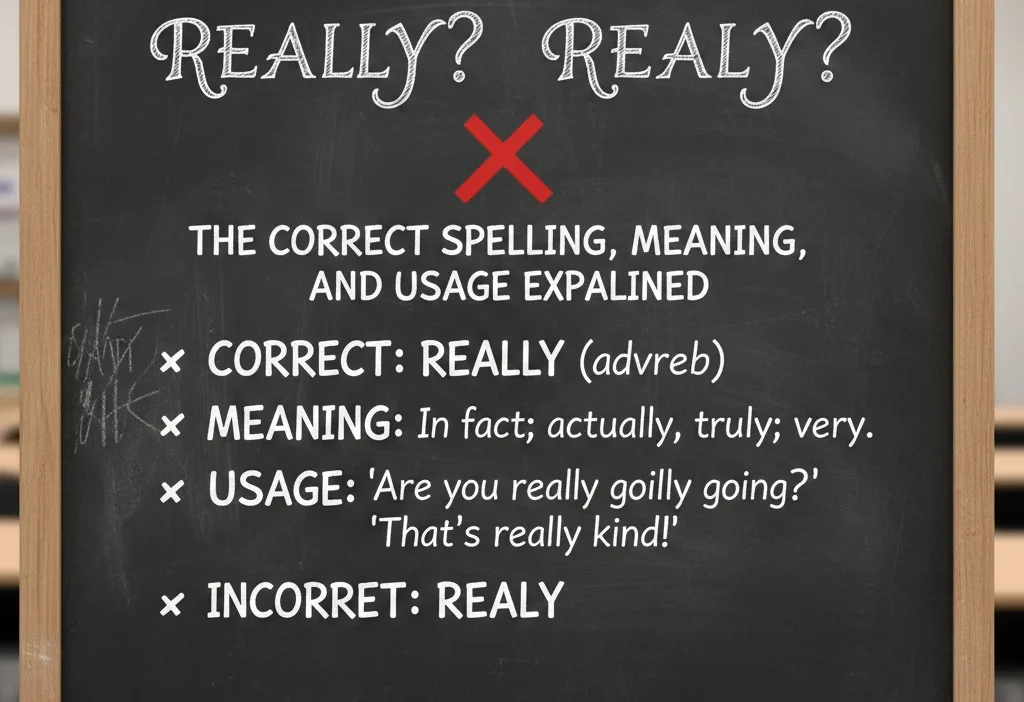
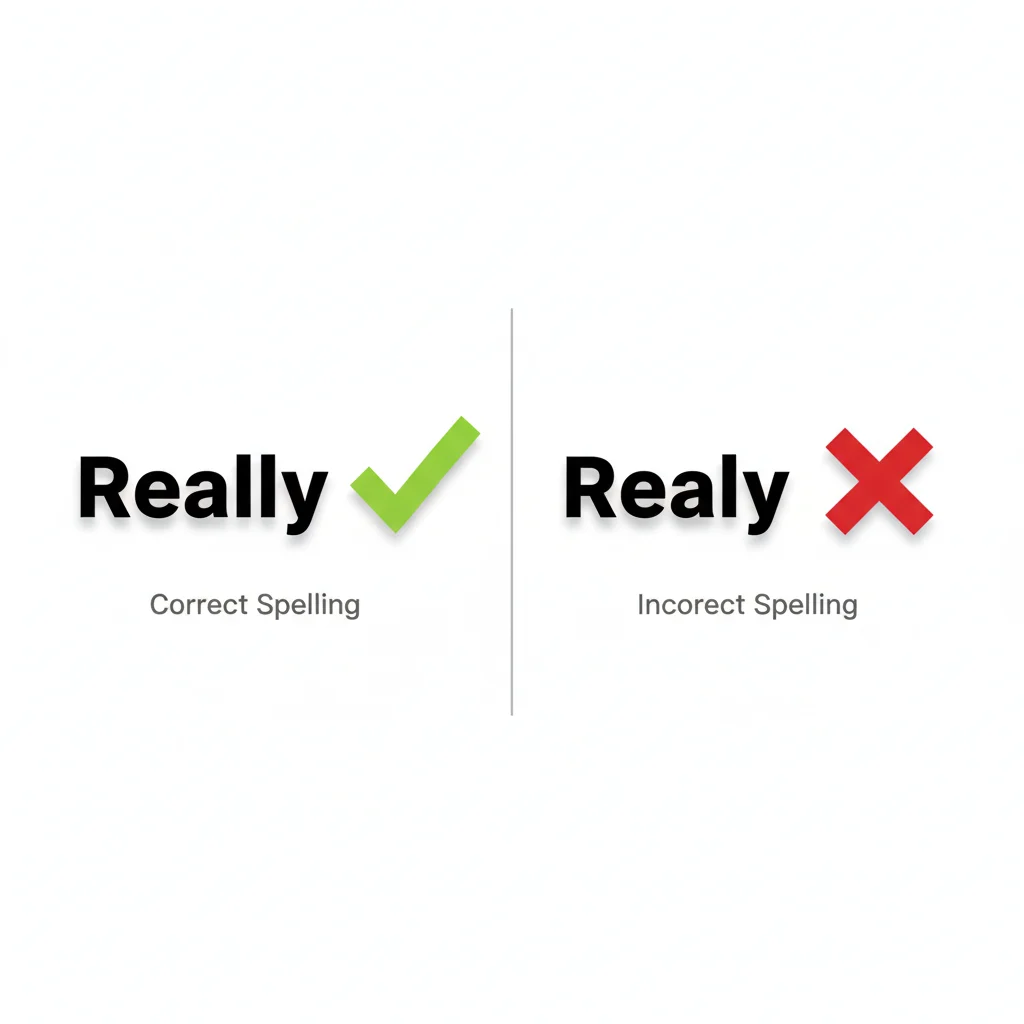
The correct spelling is really.
Realy is not a correct English word.
Really is an adverb. It means very, truly, or in fact.
Examples:
- I really like this article.
- Did that really happen?
If you ever ask, “How do you write realy?” the answer is simple: you don’t. Always write really with two Ls.
The Origin of Really / Realy
The word really comes from the adjective real, which entered English from Latin realis, meaning true or actual. Over time, English added -ly to turn real into an adverb. This pattern is common in English:
- real → really
- quick → quickly
- clear → clearly
The spelling really developed naturally through this structure. The double L happens because real + ly blends together smoothly in writing.
So, what is the meaning of relly?
There is none. Relly and realy are spelling errors, not historical variants.
British English vs American English Spelling
Good news: British English and American English spell “really” the same way. There is no regional difference here.
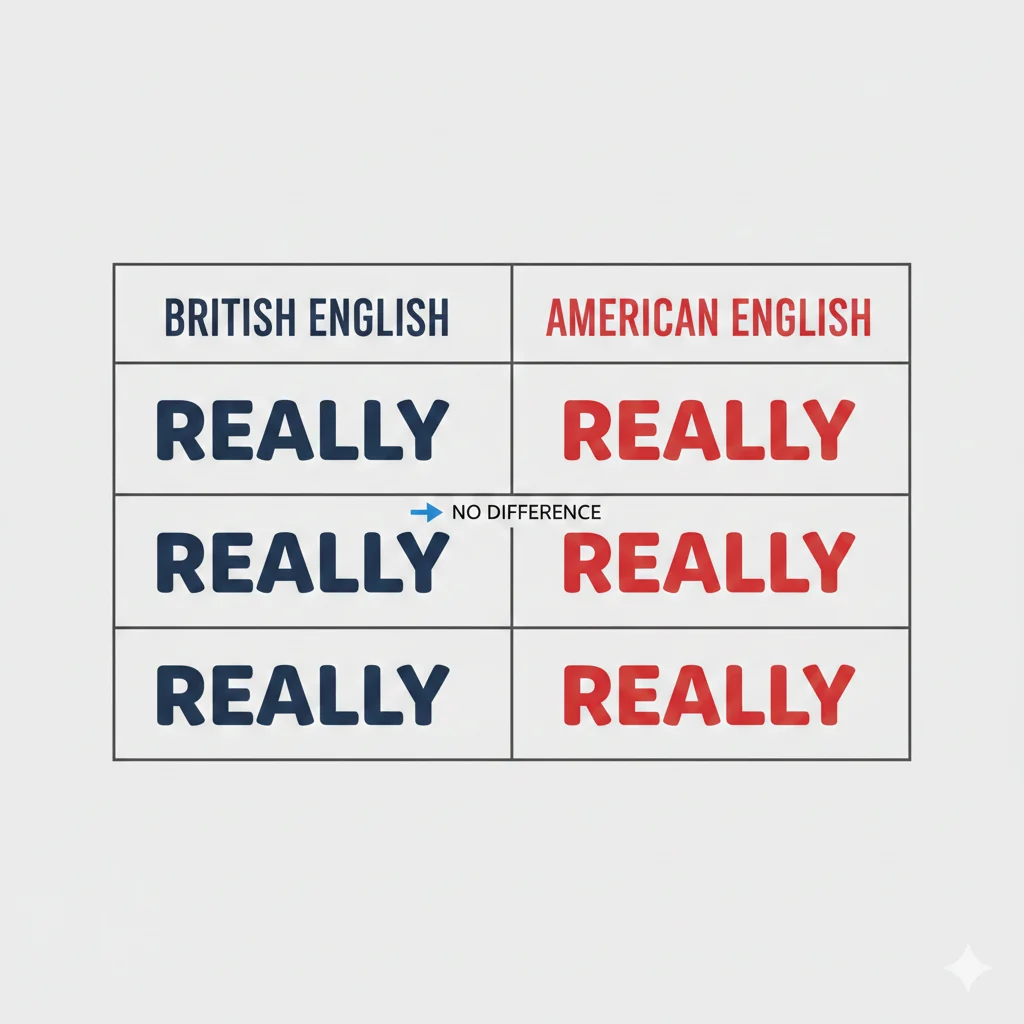
| Feature | British English | American English |
|---|---|---|
| Correct spelling | Really | Really |
| Incorrect form | Realy | Realy |
| Usage in formal writing | Yes | Yes |
| Usage in informal writing | Yes | Yes |
Unlike words such as colour/color or centre/center, really stays the same everywhere. That makes life easier.
Which Spelling Should You Use?
Always use really, no matter your audience.
- US audience: Really
- UK audience: Really
- Australia, Canada, India: Really
- Global or SEO content: Really
If your goal is professionalism, clarity, and trust, really is the only safe choice. Using realy can make your writing look careless and unpolished, especially in blogs, emails, or academic work.
Common Mistakes with Really / Realy
Here are the most frequent errors people make:
- Dropping one L
❌ realy
✅ really - Phonetic spelling
❌ relly
✅ really - Autocorrect trust
Autocorrect does not always catch this error. Always proofread. - Overuse in formal writing
While correct, really can sound weak in formal texts. Sometimes words like very, truly, or significantly fit better.

Really in Everyday Examples
Emails:
- I really appreciate your quick response.
News writing:
- The event really changed public opinion.
Social media:
- This movie is really good!
Formal writing:
- The results are really significant for future research.
So if you ask, “What does really now mean?” today it often adds emphasis or emotion, especially in digital communication.
Really – Google Trends & Usage Data
Search data shows that “Is it really or realy?” is most popular in countries where English is a second language, such as India, Pakistan, and the Philippines. Students and content writers search it often for accuracy.
Globally, really appears in:
- Education content
- Blogs and SEO articles
- Emails and workplace writing
- Social media captions
Google clearly recognizes really as the correct and dominant form. Realy has no valid usage data because it is a spelling error.
Comparison Table: Really vs Realy
| Feature | Really | Realy |
|---|---|---|
| Correct English word | Yes | No |
| Dictionary listed | Yes | No |
| Used in formal writing | Yes | No |
| SEO safe | Yes | No |
| Meaning | Truly, very | None |
FAQs About Really / Realy
1. Is it really or realy?
It is really. Realy is incorrect.
2. How do you write realy correctly?
You write really with two Ls.
3. What is the meaning of relly?
There is no meaning. It is a spelling mistake.
4. What does really now mean in modern English?
It adds emphasis, emotion, or confirmation.
5. Can really be used in formal writing?
Yes, but use it carefully to avoid sounding informal.
6. Why do people misspell really?
Fast typing, pronunciation, and autocorrect errors.
7. Is really the same in British and American English?
Yes, the spelling is identical.
Conclusion
The confusion between realy / really may seem small, but it has a big impact on clarity and credibility. The rule is simple: really is the only correct spelling, and realy is always wrong. There is no regional difference, no hidden exception, and no modern shortcut that changes this rule. Whether you are writing an email, blog post, academic paper, or social media caption, really is the form you should trust.
Understanding the origin of the word, its grammatical role, and how it is used in everyday language makes spelling easier to remember. When you know that really comes from real + ly, the double L makes perfect sense. This knowledge helps you write faster and with more confidence.
In short, if you want your English to look professional, polished, and SEO-friendly, stick with really every time. Once you learn it, you will never doubt it again—and that is really a good thing.

Celeste Rowan is a creative writer and editor at WordContrast.com, crafting compelling stories across topics like motivation, education, and personal development. She combines a warm narrative voice with data-driven insight to make her writing both relatable and reliable. Celeste believes words can spark change—and she writes to make that change happen.