Why “Mama” and “Momma” Confuse So Many People
Have you ever wondered whether to say mama or momma?
You’re not alone! Many English learners — and even native speakers — often get mixed up between these two sweet words for “mother.”
Both mama and momma sound the same, but their spelling, regional usage, and tone can differ slightly.
This easy guide will help you understand:
- What each word means
- The real difference between mama and momma
- How to use them correctly with fun examples
- Common mistakes and quick tips to remember
By the end, even a beginner (or a 4th-grader!) will be able to use both words perfectly in writing and speech.
🧩 What Does Each Word Mean?
1. Mama — The Classic Word for Mother
Mama is a noun that means mother or mom.
It’s used in many English-speaking countries and is one of the first words babies learn to say.
👉 Simple Definition:
“Mama” means mother, said in a soft, loving, or childish way.
Examples:
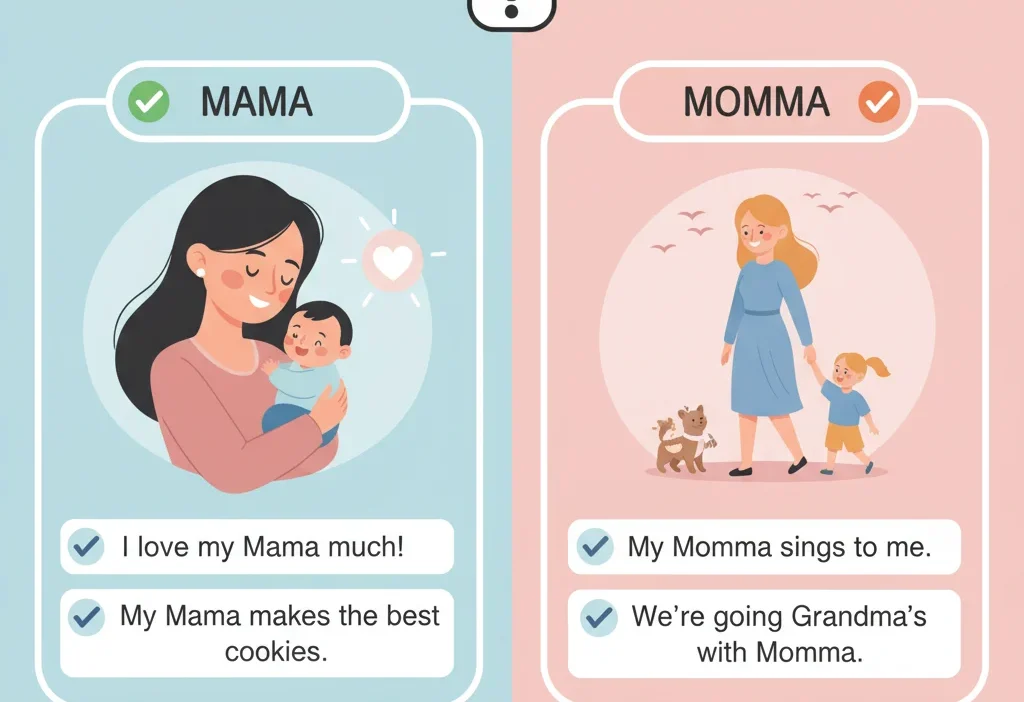
- My mama makes the best cookies in the world.
- The baby called out, “Mama!” when she saw her mother.
- I miss my mama when I’m at school.
It feels sweet, emotional, and childlike.
2. Momma — The Southern or Informal Version
Momma is also a noun, meaning mother.
However, it’s mostly used in the Southern United States or in informal speech.
👉 Simple Definition:
“Momma” means mother, used in a warm, casual, or regional way.
Examples:
- My momma told me to always tell the truth.
- He gave his momma a big hug before leaving.
- That’s my momma’s favorite song!
It gives a homey, cozy, country-style feeling.
🔍 The Key Difference Between “Mama” and “Momma”
Although both words mean mother, their spelling, tone, and regional use are slightly different.
| Feature | Mama | Momma |
|---|---|---|
| Meaning | Mother (universal, common worldwide) | Mother (mainly used in U.S. Southern English) |
| Tone | Soft, childlike, affectionate | Warm, folksy, regional |
| Formality | Informal but more universal | Very informal, regional |
| Common In | U.S., U.K., Africa, Asia | Southern U.S., African-American Vernacular English |
| Example | “My mama loves gardening.” | “My momma’s cooking is the best!” |
💡 Quick Tip to Remember
Use “Mama” if you want a simple, worldwide version of “mother.”
Use “Momma” if you’re writing or speaking in a Southern or cozy family tone.
🚫 Common Mistakes and How to Avoid Them
❌ Mistake 1: Thinking “Momma” is Wrong
Many learners think momma is incorrect because it’s not in all dictionaries.
✅ Correction: It’s not wrong! It’s just informal and regional — perfect for storytelling, songs, or dialogue.
❌ Mistake 2: Mixing Spellings in One Sentence
Example:
“My mama said momma will come later.” (❌ Confusing)
✅ Correct:
“My mama said she will come later.”
or
“My momma said she will come later.”
👉 Always stick to one style in a sentence or piece of writing.
❌ Mistake 3: Using in Formal Writing
Don’t use mama or momma in essays, emails, or school reports.
✅ Use: Mother or Mom.
🕊️ When to Use “Mama”
Use mama when you want to sound cute, emotional, or childlike.
Examples:
- The toddler ran to his mama.
- I drew a picture for my mama.
- Mama said it’s time for bed.
- When I was sick, my mama took care of me.
- I love my mama more than anything!
💭 Memory Hack:
Think of “Mama” as “the first word a baby says.”
Simple, short, and full of love.
🌼 When to Use “Momma”
Use momma when you want a Southern, friendly, or cozy vibe.
Examples:
- My momma’s biscuits are famous in our town!
- He calls his momma every Sunday.
- That’s my momma’s old rocking chair.
- Don’t mess with my momma!
- Momma always knows best.
💭 Memory Hack:
Remember: “Momma” = “Mom” + “a.”
It feels like a warm hug — perfect for casual talk or storytelling.
🧠 Quick Recap: Mama vs Momma
- Both mean “mother.”
- Mama = Common, global, simple.
- Momma = Regional, Southern, cozy.
- Avoid in formal writing — use “Mother” instead.
- Always use one style in your writing for consistency.
✅ Easy Rule:
Use Mama for general use.
Use Momma for personal or Southern-style writing.
🧭 Advanced Tips: Extra Insights for Curious Learners
- Origin: “Mama” comes from baby talk — one of the earliest sounds babies can say. “Momma” developed later as a dialect version in American English.
- In Writing: Use “mama” in storybooks or poems to show affection. Use “momma” for Southern characters or emotional dialogue.
- In Texting or Online: Either is fine! But most people type mama for simplicity.
- In British English: “Mum” or “Mummy” are more common than “Mama” or “Momma.”
📝 Mini Quiz: Test Your Understanding
Fill in the blanks with mama or momma.
- The baby smiled when he saw his _______.
- My _______ said to clean my room.
- That’s my _______’s favorite movie!
- In the South, people often say _______ instead of “mother.”
- _______ told me stories before bed every night.
(Answers: 1. mama, 2. momma, 3. momma, 4. momma, 5. mama)
❓ Frequently Asked Questions (FAQs)
1. Is “momma” a real word?
Yes! “Momma” is real and used informally, especially in Southern U.S. English.
2. Which is more common — mama or momma?
“Mama” is more common and widely understood around the world.
3. Can I use “mama” in formal writing?
No, use “mother” in formal or academic writing.
4. Is “momma” American English?
Yes, mostly. It’s common in the Black, communities.
5. What about “mommy” or “mum”?
“Mommy” is American and used by kids. “Mum” is British. “Mama” and “Momma” are informal variations of “mother.”
🌷 Conclusion
Now you know the clear difference between mama and momma!
Both are loving ways to say “mother,” but their usage and tone make them unique.
- Use mama for a universal, sweet tone.
- Use momma for a regional, cozy touch.
Keep practicing these words in your writing and conversations — and soon, you’ll never be confused again.
Remember, every small step in learning English makes you better every day! 🌟

Henry Vale is a tech-savvy content creator at WordContrast.com, known for his in-depth guides and how-to articles. With a background in digital media and a passion for innovation, Henry focuses on simplifying technology for everyday users. His mission is to empower readers with clear, actionable knowledge they can use to improve their digital lives.