Have you ever watched your cats rolling, jumping, and swatting at each other — and wondered, “Are they playing or fighting?” You’re not alone!
Cats often play in ways that look rough, with chasing, biting, and wrestling. But sometimes, those same actions can mean real aggression. Knowing how to tell if cats are playing or fighting helps you keep them safe, happy, and stress-free.
In this simple guide, you’ll learn how to read your cats’ body language, understand the key differences between play and aggression, and know when to step in — or when to just let them have fun. Even if you’re a new cat owner, by the end of this article, you’ll be able to tell the difference easily.
🐱 What Does It Mean When Cats Play?
Playing is how cats practice hunting skills, build bonds, and burn energy. It’s natural and healthy — even adult cats enjoy it.
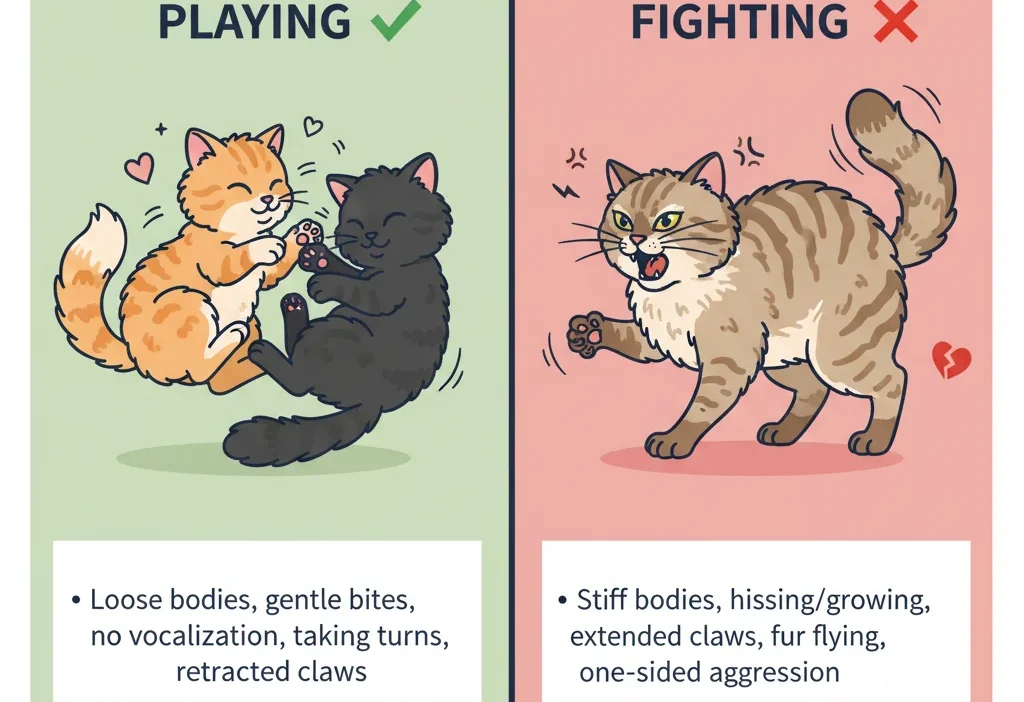
When cats are playing, you’ll see:
- Soft, quick movements
- Taking turns chasing or pouncing
- Quiet or gentle meows
- Loose, relaxed body posture
🧩 Examples of Play Behavior:
- Two cats take turns chasing each other through the house.
- One cat rolls on its back while the other bats lightly with its paw.
- They stop mid-play to groom each other or rest together.
Play is like a friendly game of tag — it’s fast, exciting, but never mean-spirited.
😾 What Does It Mean When Cats Fight?
Fighting, on the other hand, is serious. It happens when cats feel threatened, scared, or territorial. It can lead to injuries if not stopped.
When cats are fighting, you’ll notice:
- Hissing, growling, or loud yowls
- Ears flat against the head
- Fur puffed up (especially tail and back)
- One cat always chasing or cornering the other
- Stiff, tense movements
⚠️ Examples of Fighting Behavior:
- One cat pins the other and won’t let go.
- There’s loud, harsh meowing or screeching.
- Afterward, both cats stay far apart, hiding or glaring.
Fighting is not playful. It’s aggressive and stressful for both cats — and often for their humans too.
🧠 The Key Difference Between Cats Playing and Fighting
Here’s a quick comparison table to make it crystal clear:
| Behavior Sign | When Cats Are Playing 🐾 | When Cats Are Fighting 😾 |
|---|---|---|
| Sounds | Quiet, occasional meows or chirps | Loud growling, hissing, screaming |
| Body Language | Relaxed, loose, bouncy | Stiff, puffed up, tense |
| Ears | Forward or slightly sideways | Flattened back |
| Biting | Gentle, no harm done | Hard bites, possible injury |
| After Play | Cats stay near or groom each other | Cats hide, stare, or avoid each other |
Quick Tip to Remember:
If both cats take turns chasing and wrestling — it’s play.
If one cat is always the aggressor — it’s a fight.
🚫 Common Mistakes Cat Owners Make
Here are a few common misunderstandings and how to fix them:
| ❌ Mistake | ✅ Correction |
|---|---|
| Thinking all rough play is fighting | Some cats just play more energetically. Look for relaxed body language. |
| Ignoring loud hissing | Hissing is a warning sign — separate them before it escalates. |
| Punishing cats for play-fighting | It confuses them. Instead, distract with toys or treats. |
Why it happens:
People often assume cats “don’t get along” when they’re actually just being playful. Learning to watch their signals prevents unnecessary stress.
🐾 When to Let Cats Play
Play is healthy and helps cats bond. Let them continue if:
- Both are enjoying it.
- They take turns chasing.
- There’s no real growling or fur puffing.
- They easily separate and come back together.
Real-Life Examples:
- Two kittens wrestling, then both flop down tired — that’s play!
- Your cats chase each other and suddenly stop to eat — that’s play.
- One cat hides behind furniture and pounces for fun — that’s play.
🎯 Memory Hack:
Think “Play = Pause + Pounce + Purrs.”
Playful cats take breaks and stay calm afterward.
😼 When to Stop Cats from Fighting
Step in immediately if:
- You hear growls, screams, or deep hisses.
- One cat corners or traps the other.
- There’s fur flying or blood drawn.
- One cat looks terrified or hides after.
What You Can Do:
- Clap loudly or make a soft noise to distract them.
- Never grab them — use a towel or object to separate.
- Give them time apart in different rooms.
- Reintroduce slowly using scent or treats.
💡 Tip:
Cats that fight often might need separate feeding areas or litter boxes. This reduces competition and stress.
🧩 Quick Recap: Playing vs. Fighting
- Play: Relaxed, mutual, quiet, fun.
- Fight: Loud, aggressive, one-sided.
- Afterward: Play = cuddle or nap. Fight = hiding or tension.
- Tip: Look at body language, not just sound!
A good rule of thumb:
If both cats are having fun, it’s play. If one cat looks scared, it’s a fight.
🌍 Advanced Tips for Cat Owners
- Origins: In the wild, kittens learn to hunt through play. That’s why even adult cats “practice” stalking and pouncing.
- In Multi-Cat Homes: Cats with strong bonds often wrestle more. It’s their way of bonding, not fighting.
- In Writing or Forums: Cat experts often call this “social play” versus “aggressive interaction.”
- Online Misunderstanding: Videos of cats “fighting” often go viral — but most of them are just playful cats misunderstood!
🧠 Mini Quiz — Test Yourself!
Fill in the blanks:
- Cats with _______ bodies are usually playing.
- Loud hissing or growling means a _______.
- If cats take turns chasing, it’s likely _______.
- After a fight, cats often _______ each other.
- Playful cats may use their claws but do not _______.
(Answers: relaxed, fight, play, avoid, hurt)
❓ FAQs
1. How can I tell if my cats like each other?
If they groom each other, sleep close, or take turns playing — they’re friends.
2. Should I stop my cats from rough play?
Only if it turns aggressive. Otherwise, it’s normal and helps them bond.
3. Why do cats bite each other’s necks?
It’s often play behavior — a safe way to “pretend hunt.” But if one screams or tries to escape, step in.
4. What if my older cat always fights with my kitten?
Give them time apart, introduce slowly, and use toys for shared play sessions.
5. Can neutering help reduce fights?
Yes! It often lowers aggression and territorial behavior.
🐾 Conclusion
Now you know exactly how to tell if cats are playing or fighting!
Watch their body language, listen to their sounds, and notice how they act afterward. Remember — calm, mutual behavior means play; tense, loud, or one-sided behavior means a fight.
With practice, you’ll become fluent in “cat language.” Soon, you’ll know when to laugh — and when to step in.
Keep observing, keep learning, and your furry friends will live happier, more peaceful lives together. 🐱❤️

Marianne Solace is a lifestyle and personal-growth writer for WordContrast.com. Her work blends inspiration with practicality, offering thoughtful insights on wellness, creativity, and mindful living. When she’s not writing, Marianne enjoys journaling with a cup of coffee, exploring art museums, and helping others find balance through the written word.