Many people get confused when they hear bronchitis or pneumonia. Both sound serious, both affect the lungs, and both can make you cough and feel tired. But are they the same? Not really!
In this easy guide, we’ll explain the difference between bronchitis and pneumonia in simple English. You’ll learn what each one means, how they affect your body, and how to tell them apart.
By the end, you’ll easily remember when someone might have bronchitis and when it could be pneumonia — with clear examples and simple tips anyone can understand.
What Does Each Word Mean?
Let’s start by learning what each word means and how it’s used in daily English.
What is Bronchitis?
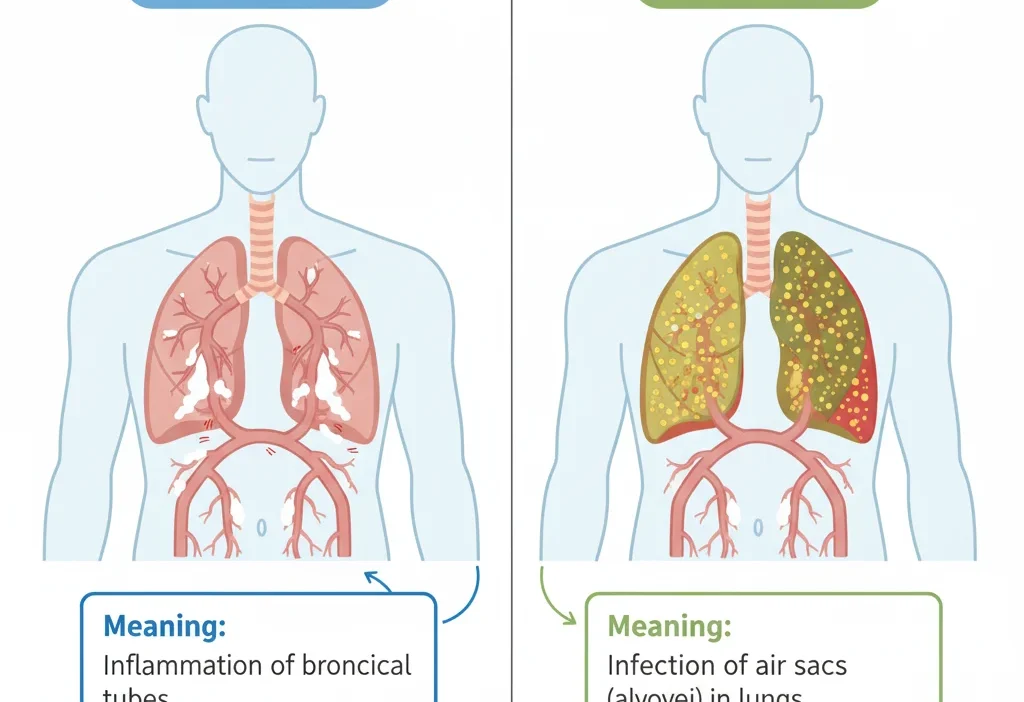
Bronchitis is a noun that means the inflammation (swelling and irritation) of the bronchial tubes — the airways that carry air to your lungs.
When you have bronchitis, these tubes get swollen, making it hard to breathe or stop coughing.
Simple meaning:
Bronchitis = Swelling of airways (not the lungs themselves).
3 easy examples:
- I caught bronchitis after having a bad cold.
- The doctor said my bronchitis will go away in a few weeks.
- People who smoke often get chronic bronchitis.
Part of speech: Noun
What is Pneumonia?
Pneumonia is a noun that means an infection in the lungs themselves.
It causes the air sacs in your lungs to fill with fluid or pus, making it hard for oxygen to get into your blood.
Simple meaning:
Pneumonia = Infection in the lungs (not just airways).
3 easy examples:
- My grandmother was hospitalized with pneumonia.
- The doctor gave me antibiotics for pneumonia.
- Pneumonia can be dangerous if not treated early.
Part of speech: Noun
The Key Difference Between Bronchitis and Pneumonia
Though both affect your breathing, they’re not the same illness.
Here’s a simple comparison table to help you understand the difference between bronchitis and pneumonia:
| Feature | Bronchitis | Pneumonia |
|---|---|---|
| Definition | Swelling of the bronchial tubes (airways) | Infection in the lungs |
| Main Cause | Usually caused by a virus | Caused by bacteria, virus, or fungi |
| Area Affected | Airways (not deep in lungs) | Lungs (air sacs) |
| Common Symptoms | Cough with mucus, sore throat, tiredness | Fever, chest pain, shortness of breath, cough with phlegm |
| Severity | Usually mild | Can be severe and need medical help |
| Treatment | Rest, fluids, sometimes inhalers | Antibiotics or hospital care in serious cases |
Quick Tip to Remember
👉 Bronchitis starts with B — think “Breathing tubes.”
👉 Pneumonia starts with P — think “Problem in the lungs.”
Common Mistakes and How to Avoid Them
Many people use bronchitis and pneumonia as if they mean the same thing — but they don’t!
Here are a few common mistakes:
❌ Wrong: I think I have pneumonia; I’ve been coughing for two days.
✅ Correct: I might have bronchitis because of my cough.
👉 Why: Pneumonia doesn’t develop that quickly — it usually comes with fever and chest pain.
❌ Wrong: He has a lung infection called bronchitis.
✅ Correct: He has a lung infection called pneumonia.
👉 Why: Bronchitis affects the airways, not the lung tissue itself.
When to Use “Bronchitis”
Use bronchitis when talking about:
- A long-lasting cough after a cold
- Swelling or irritation of the airways
- Symptoms like mucus, tiredness, or mild fever
Example sentences:
- The doctor said my cough is just bronchitis, not pneumonia.
- Bronchitis can make your chest feel heavy.
- My brother gets bronchitis every winter.
- Drinking warm tea helps soothe bronchitis.
- If you have bronchitis, avoid smoking and dust.
Memory hack:
🫁 Think “bronchitis = breathing problem in tubes,” not deep in lungs.
When to Use “Pneumonia”
Use pneumonia when:
- You’re talking about a serious infection inside the lungs
- The person has a high fever, chills, or shortness of breath
- The doctor mentions fluid in the lungs
Example sentences:
- The patient was admitted with pneumonia.
- Pneumonia often needs antibiotics.
- After getting the flu, she developed pneumonia.
- Babies and the specific are more at risk of pneumonia.
- Getting a flu shot can help prevent pneumonia.
Memory hack:
🔥 “P” for Pneumonia = Powerful infection in the lungs.
Quick Recap: Bronchitis vs Pneumonia
- Bronchitis = Inflammation of airways (bronchial tubes)
- Pneumonia = Infection in the lungs
- Bronchitis is usually mild; pneumonia is more serious
- Bronchitis causes a cough with mucus; pneumonia causes cough, fever, and chest pain
- Both need rest, but pneumonia often requires medical treatment
✅ Simple rule:
If your chest feels heavy but you can still breathe fine — bronchitis.
If breathing hurts or feels tight with fever — pneumonia.
Advanced Tips: Medical & Linguistic Insight
- Both terms come from Greek roots.
- Broncho- means “airway” or “windpipe.”
- Pneumo- means “lung” or “air.”
- In medical writing, both are nouns used to name diseases, not verbs.
Example: “He has pneumonia,” not “He pneumonias.” - In everyday English, they’re used to describe illness — not feelings or actions.
Example: You can’t “feel bronchitis,” but you can have bronchitis. - Misusing them in conversation or online can confuse people about how serious your condition is.
Mini Quiz: Test Yourself!
Fill in the blanks with bronchitis or pneumonia.
- I have a mild cough and sore throat; my doctor says it’s __________.
- When the lungs fill with fluid, it’s called __________.
- Smoking can make __________ come back often.
- My grandmother is recovering from __________.
- You can have a fever and chills with __________.
- Cold air can trigger __________ in some people.
(Answers: 1. bronchitis, 2. pneumonia, 3. bronchitis, 4. pneumonia, 5. pneumonia, 6. bronchitis)
FAQs
1. What is the main difference between bronchitis and pneumonia?
Bronchitis affects the airways, while pneumonia affects the lungs themselves.
2. Can bronchitis turn into pneumonia?
Yes, if bronchitis is not treated or your immune system is weak, it can develop into pneumonia.
3. Are both diseases contagious?
Both can be contagious, especially viral bronchitis and bacterial pneumonia, but it depends on the cause.
4. How do doctors treat bronchitis and pneumonia?
Bronchitis often needs rest, fluids, and inhalers, while pneumonia may require antibiotics or hospitalization.
5. Which is more dangerous: bronchitis or pneumonia?
Pneumonia is generally more serious and can be life-threatening without treatment.
Now you know exactly how to tell the difference between bronchitis and pneumonia.
Remember — bronchitis affects your airways, while pneumonia affects your lungs.
If you ever hear someone mix them up, you can explain it clearly! Keep learning and improving your English every day — even medical words can be easy when explained simply. 🌿

Marianne Solace is a lifestyle and personal-growth writer for WordContrast.com. Her work blends inspiration with practicality, offering thoughtful insights on wellness, creativity, and mindful living. When she’s not writing, Marianne enjoys journaling with a cup of coffee, exploring art museums, and helping others find balance through the written word.