Baby ringworm or eczema are two common skin problems that look similar but are very different. Ringworm is a fungal infection that spreads and forms ring-shaped rashes, while eczema is a non-contagious skin condition that causes dry, itchy patches. Knowing the difference helps parents choose the right treatment fast and keep their baby comfortable.
Many parents panic when they see a red rash on their baby’s skin. The first thought is often: baby ringworm or eczema? This confusion is very common because both conditions can look similar at first. They can cause redness, itching, and dry skin. But here’s the good news: once you understand the difference between baby ringworm and eczema, it becomes much easier to treat your child properly.
This complete guide explains baby ringworm or eczema in very simple words. You will learn what each condition means, how they look, how they feel, and how they are treated. We will also share easy examples, common mistakes parents make, and quick memory tips. Even if English or medical terms are not easy for you, this article is written so that even a 4th-grade student can understand it.
What Does Each Condition Mean?
What Is Baby Ringworm?
Despite its scary name, ringworm is not a worm. It is a fungal infection that affects the skin.
- Type: Infection (fungus)
- Contagious: Yes
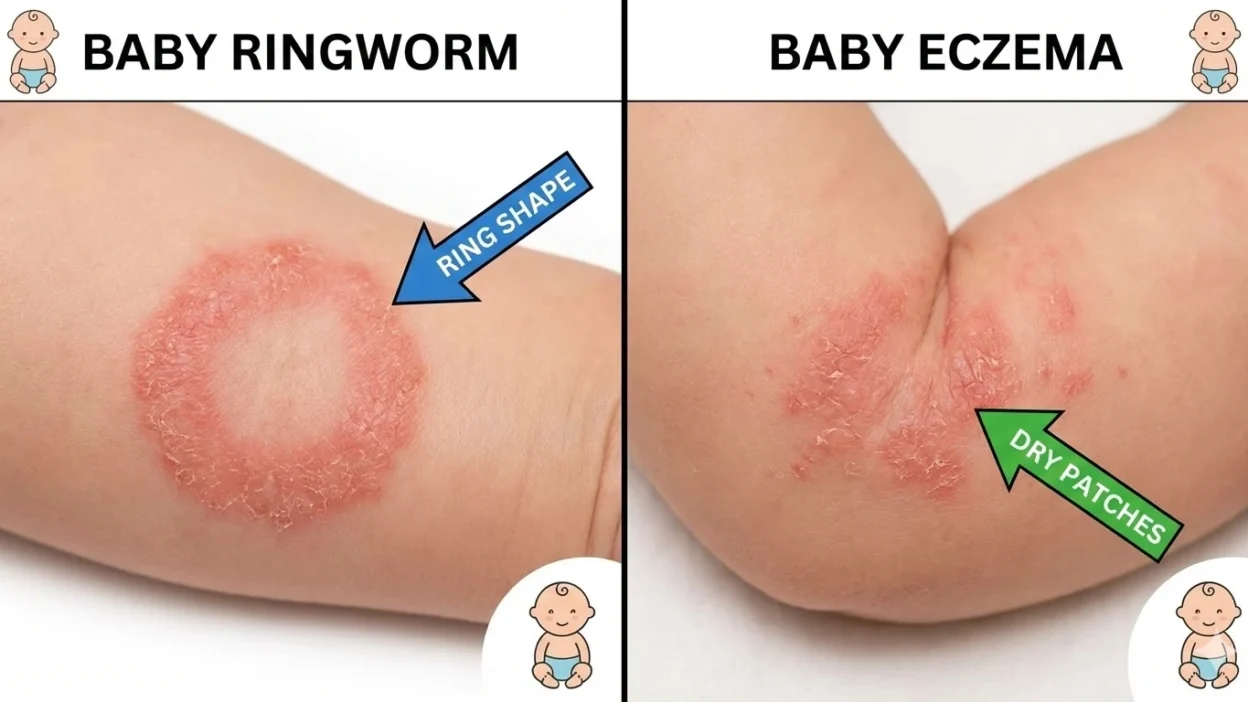
- Looks like: A red circle with a clearer center
Easy Examples:
- A baby gets a round red patch after touching a pet.
- The rash spreads slowly over days.
- The center looks lighter than the edges.
👉 Think of ringworm like a circle drawn with a red marker on the skin.
What Is Baby Eczema?
Eczema is a skin condition caused by dry and sensitive skin. It often runs in families.
- Type: Skin condition (not an infection)
- Contagious: No
- Looks like: Dry, rough, itchy patches
Easy Examples:
- Baby’s cheeks become dry and red in winter.
- Skin feels rough like sandpaper.
- Scratching makes it worse.
👉 Think of eczema like very dry skin that gets angry easily.
The Key Difference Between Baby Ringworm and Eczema
Baby Ringworm vs Eczema Comparison Table
| Feature | Baby Ringworm | Baby Eczema |
|---|---|---|
| Cause | Fungus | Dry, sensitive skin |
| Contagious | Yes | No |
| Shape | Ring-shaped | No clear shape |
| Itching | Mild to moderate | Strong itching |
| Spread | Spreads easily | Stays in same areas |
| Treatment | Antifungal cream | Moisturizers & steroid creams |
Quick Tip to Remember:
👉 Ring = Ringworm (circle shape)
👉 Dry = Eczema (dry itchy skin)
Common Mistakes Parents Make (And How to Avoid Them)
❌ Mistake 1: Using eczema cream on ringworm
Wrong: The rash gets bigger.
Fix: Use antifungal cream for ringworm.
❌ Mistake 2: Thinking ringworm comes from worms
Wrong: Delays proper treatment.
Fix: Remember it’s a fungus, not a worm.
❌ Mistake 3: Panicking about eczema spreading
Wrong: Unnecessary worry.
Fix: Eczema does not spread to others.
When to Use the Term Baby Ringworm
Use baby ringworm when:
- The rash is round or oval
- The center looks clearer
- It slowly spreads
- Baby touched pets or shared towels
Simple Sentences:
- My baby has ringworm on the arm.
- The doctor gave antifungal cream.
- Ringworm can spread to others.
- Keep the area clean and dry.
- Ringworm usually clears in weeks.
When to Use the Term Baby Eczema
Use baby eczema when:
- Skin is dry and itchy
- No clear shape
- Gets worse in cold weather
- Family history of allergies
Simple Sentences:
- My baby has eczema on the cheeks.
- Moisturizer helps eczema.
- Eczema flares come and go.
- Scratching makes eczema worse.
- Eczema needs gentle care.
Memory Hack:
🧴 Cream = Eczema
💊 Medicine = Ringworm
Quick Recap: Baby Ringworm or Eczema
- Ringworm: Fungal, round, contagious
- Eczema: Dry skin, itchy, not contagious
- Ringworm spreads, eczema does not
- Ringworm needs antifungal cream
- Eczema needs moisture and care
Advanced Tips (Optional but Helpful)
- History: Ringworm has existed for hundreds of years and was once mistaken for worms.
- Exams & Writing: Medical exams clearly separate fungal infections from skin conditions.
- Online Mistakes: Many parents on forums confuse the two, leading to wrong treatment.
Correct naming avoids weeks of discomfort for your baby.
Mini Quiz: Test Your Understanding
Fill in the blanks:
- Ringworm is caused by a ________.
- Eczema is ______ contagious.
- A ring-shaped rash is likely ________.
- Dry itchy skin may be ________.
- Antifungal cream treats ________.
- Moisturizers help ________.
(Answers: fungus, not, ringworm, eczema, ringworm, eczema)
Frequently Asked Questions (FAQs)
1. Can baby ringworm heal on its own?
Sometimes, but treatment makes it heal faster.
2. Is baby eczema dangerous?
No, but it needs care to reduce itching.
3. Can ringworm spread to parents?
Yes, it is contagious.
4. Does eczema leave scars?
Usually no, if treated well.
5. Should I see a doctor?
Yes, if you’re unsure or the rash worsens.
Conclusion
Understanding baby ringworm or eczema helps parents act fast and avoid wrong treatments. While both conditions may look similar, they are very different in cause, spread, and care. Ringworm is a fungal infection that spreads and needs antifungal medicine. Eczema is dry, sensitive skin that needs gentle moisture and patience.
By learning the signs, shapes, and symptoms explained in this guide, you can protect your baby’s comfort and health. Keep practicing, observing, and asking questions. Learning something new every day makes you a more confident parent — and your baby will thank you with a happy smile 😊

Marianne Solace is a lifestyle and personal-growth writer for WordContrast.com. Her work blends inspiration with practicality, offering thoughtful insights on wellness, creativity, and mindful living. When she’s not writing, Marianne enjoys journaling with a cup of coffee, exploring art museums, and helping others find balance through the written word.