
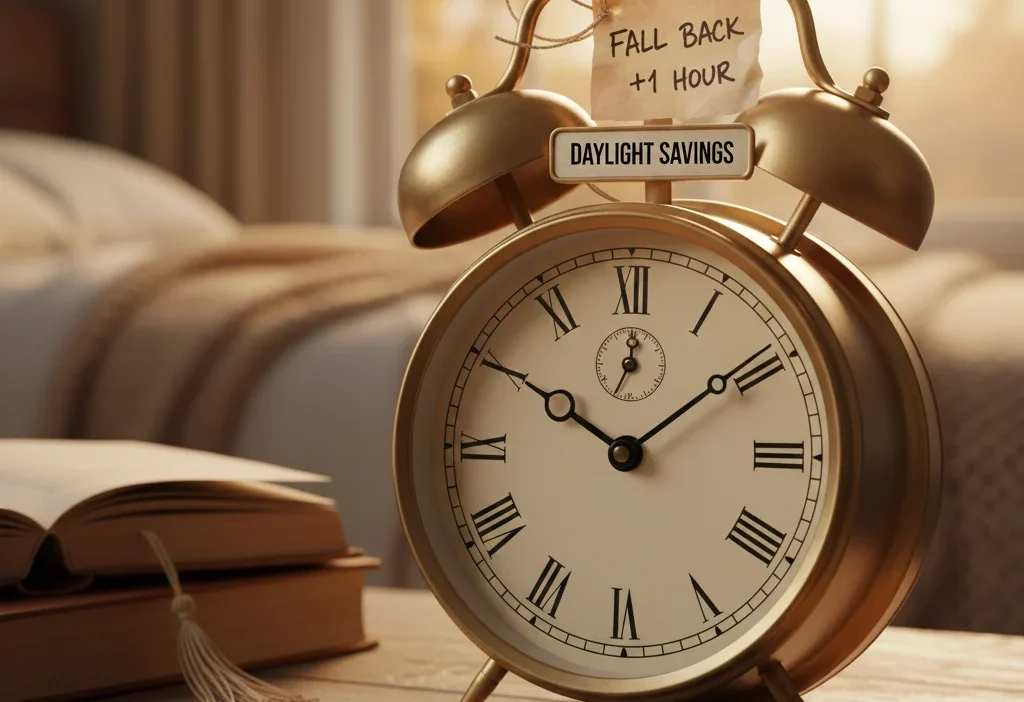
Confused about daylight saving? Learn clearly whether we are losing or gaining an hour with easy examples, tips, and practical English usage.
Every year, clocks change, and many people ask, “Are we losing or gaining an hour?” It’s a common question, especially when daylight saving time starts or ends. Some get confused and forget whether to move the clock forward or backward. Understanding this small change is simple once you know the rule.
In this article, we will explain what “losing an hour” and “gaining an hour” mean, when to use each phrase, and give easy examples you can relate to. You will also learn common mistakes people make and how to avoid them. By the end, even beginners will be able to answer confidently if they should set the clock ahead or back. This guide makes it easy, clear, and practical for daily life.
What Does Each Phrase Mean?
Losing an Hour
Meaning: When you move the clock forward, you have less time in your day, so you “lose an hour.”
Part of Speech: Verb phrase
Examples:
- We lose an hour when daylight saving starts.
- I can’t sleep much tonight because we lose an hour.
- During the time change, we lose an hour in the morning.
Tip: Think of it as time being “taken away.”
Gaining an Hour
Meaning: When you move the clock backward, you have more time in your day, so you “gain an hour.”
Part of Speech: Verb phrase
Examples:
- We gain an hour when daylight saving ends.
- I love when we gain an hour of sleep.
- This weekend, we gain an hour to relax.
Tip: Imagine time being “added” to your day.
The Key Difference Between Losing and Gaining an Hour
| Phrase | Meaning | Usage Example | Quick Tip |
|---|---|---|---|
| Losing an hour | Time is subtracted (forward) | We lose an hour tonight. | Think: forward = lose |
| Gaining an hour | Time is added (backward) | We gain an hour this weekend. | Think: back = gain |
Quick Tip: Forward = spring = lose / Backward = fall = gain
Common Mistakes and How to Avoid Them
Mistake 1: “We gain an hour in spring.”
Correction: “We lose an hour in spring.”
Why: People confuse forward and backward movement.
Mistake 2: “I lose an hour of sleep in fall.”
Correction: “I gain an hour of sleep in fall.”
Why: Fall means clocks go back, giving extra time.
Mistake 3: “Daylight saving always means losing time.”
Correction: It depends: spring = lose, fall = gain.
When to Use “Losing an Hour”
- Use when the clock moves forward.
- Common in spring during daylight saving.
- Examples:
- Don’t forget we lose an hour this Sunday.
- I hate it when we lose an hour of sleep.
- We lose an hour at 2 a.m. tomorrow.
- The meeting feels earlier because we lose an hour.
Memory Hack: “Spring forward, lose time.”
When to Use “Gaining an Hour”
- Use when the clock moves backward.
- Common in fall during daylight saving.
- Examples:
- This weekend, we gain an hour of rest.
- I love when we gain an hour in autumn.
- We gain an hour to enjoy breakfast.
- Extra study time means we gain an hour.
Visual Trick: Imagine the clock reversing → extra time added.
Quick Recap: Losing vs Gaining an Hour
- Losing an hour: Clock goes forward → less time → spring.
- Gaining an hour: Clock goes back → more time → fall.
- Spring = forward = lose
- Fall = backward = gain
- Common mistake: Confusing forward and backward.
- Memory tip: “Spring forward, fall back.”
Advanced Tips
- Origin: “Daylight saving” started to save energy by adjusting clocks.
- Formal usage: Correct in emails, essays, and news articles about time changes.
- Online texting: Misusing “losing” or “gaining” can confuse readers about schedules.
Mini Quiz
Fill in the blanks:
- In spring, we _____ an hour. (lose/gain)
- Extra sleep in fall means we _____ an hour.
- Daylight saving starts: we _____ an hour.
- Clocks go back in autumn; we _____ an hour.
- I always feel tired when we _____ an hour.
FAQs
- Q: Are we losing or gaining an hour in spring?
A: Losing an hour. Clocks move forward. - Q: Are we losing or gaining an hour in fall?
A: Gaining an hour. Clocks move backward. - Q: Why do people get confused about gaining or losing an hour?
A: Because it depends on whether the clock moves forward or backward. - Q: Is “gain an hour” always positive?
A: Yes, usually it means more time or sleep. - Q: How can I remember which phrase to use?
A: Use the memory trick: “Spring forward, fall back.”
Conclusion
Now you know exactly whether we are losing or gaining an hour during daylight saving. “Losing an hour” means moving the clock forward and having less time, while “gaining an hour” means moving the clock back and getting extra time. You also learned simple tips, real-life examples, and memory hacks to avoid common mistakes. By practicing these phrases in everyday conversations, writing, or school projects, you will never confuse them again. Remember, understanding time changes is simple once you follow the rules: spring forward = lose, fall back = gain. Keep practicing, and soon you’ll confidently explain this to anyone!