
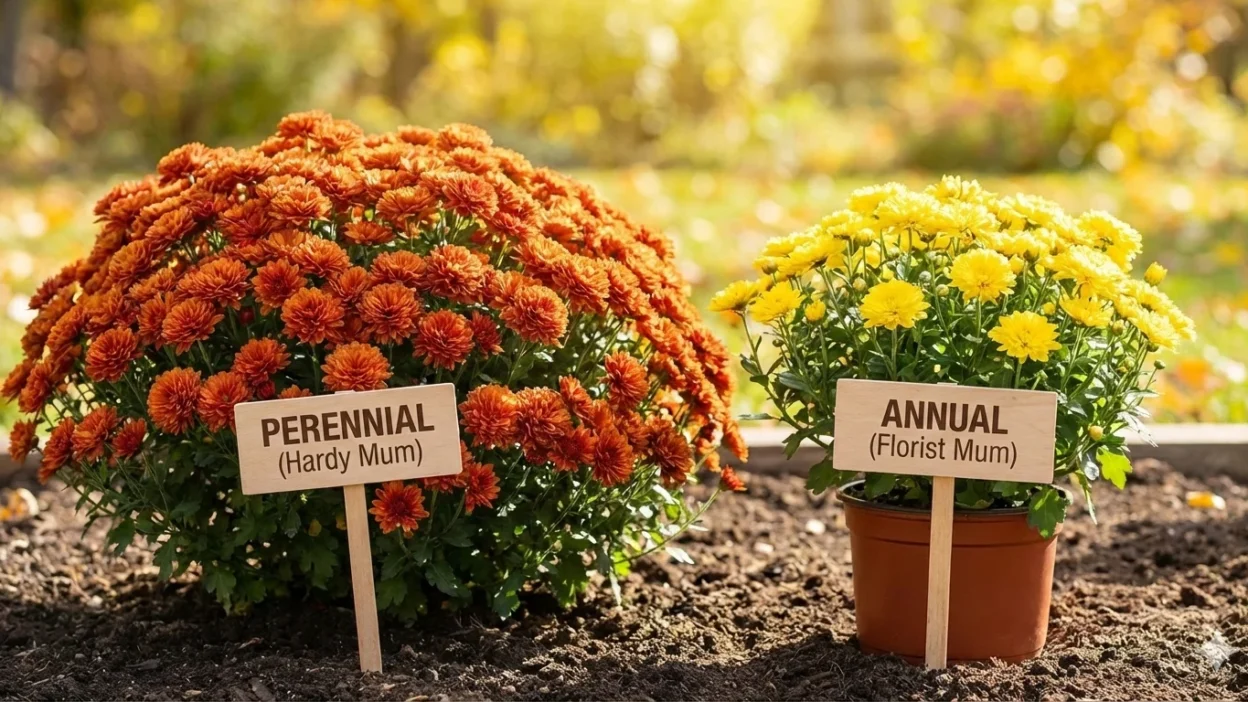
Mums are perennials, but many are grown as annuals.
Garden mums can come back every year if planted correctly and cared for well. Florist mums usually bloom once and do not return.
Many people ask the same question every year: are mums annuals or perennials?
The confusion happens because mums are sold everywhere in fall, just like annual flowers. Some mums come back year after year, while others do not. This makes gardeners unsure about the correct answer.
In this easy guide, you will learn what mums really are, why some return and some don’t, and how to tell the difference. We will explain everything in plain English, using simple examples that even a 4th-grade student can understand.
By the end of this article, you will know:
- The true meaning of annuals and perennials
- The difference between garden mums and florist mums
- How to plant mums so they come back every year
Let’s make mums simple and clear 🌱
What Does Each Word Mean?
To understand are mums annuals or perennials, we must first understand what annuals and perennials mean.
What Are Annuals?
Annual plants live for one season only.
They grow, bloom, make seeds, and die in the same year.
Simple examples:
- Petunias
- Marigolds
- Zinnias
Easy story:
An annual is like a notebook you use for one school year. When the year ends, you need a new one.
What Are Perennials?
Perennial plants live for many years.
They may die back in winter but grow again in spring.
Simple examples:
- Roses
- Lavender
- Daylilies
Easy story:
A perennial is like your school building. You leave each day, but it’s still there the next year.
Are Mums Annuals or Perennials? (Simple Explanation)
Here is the clear answer again:
👉 Mums are perennials by nature.
👉 But many mums are treated like annuals.
This depends on:
- The type of mum
- When it is planted
- How it is cared for
The Key Difference Between Annual Mums and Perennial Mums
Comparison Table: Are Mums Annuals or Perennials?
| Feature | Annual Mums | Perennial Mums |
|---|---|---|
| Life span | One season | Many years |
| Common name | Florist mums | Garden mums |
| Sold when | Fall (indoors & pots) | Spring or early fall |
| Comes back next year | ❌ No | ✅ Yes |
| Cold hardy | ❌ No | ✅ Yes |
Quick Tip to Remember
💡 If it’s meant for indoor decoration, it’s likely an annual.
If it’s meant for gardens, it’s likely a perennial.
Common Mistakes and How to Avoid Them
Mistake 1: Thinking all mums are annuals
❌ “Mums always die after fall.”
✅ Truth: Many mums return every year.
Why it happens:
Most people buy florist mums that are not made for cold weather.
Mistake 2: Planting mums too late
❌ Planting in late fall
✅ Planting in spring or early fall
Why it matters:
Mums need time to grow roots before winter.
Mistake 3: Not checking the plant label
❌ Ignoring the tag
✅ Reading “hardy mum” or “garden mum”
Fix:
Always read the label before buying.
When to Use Annual Mums
Annual mums are best when you want instant color with no long-term care.
Use annual mums when:
- Decorating for fall or festivals
- Placing pots on porches
- Using indoor plants
- You don’t want to worry about winter care
Simple examples:
- I bought annual mums to decorate my doorway.
- These mums are perfect for fall parties.
- Annual mums bloom fast and look bright.
- We throw them away after autumn ends.
When to Use Perennial Mums
Perennial mums are perfect for long-term gardens.
Use perennial mums when:
- Planting flower beds
- Wanting blooms every fall
- Gardening in cold climates
- Saving money over time
Simple examples:
- My garden mums came back this year.
- Perennial mums survive winter easily.
- These mums bloom every fall.
- I planted mums near my fence.
- Garden mums grow bigger each year.
Memory Hack 🧠
🌼 Garden = Perennial
Gift Pot = Annual
How to Make Mums Come Back Every Year
If you want mums to act like perennials, follow these simple steps:
- Plant in the ground, not just pots
- Plant in spring or early fall
- Choose hardy garden mums
- Water well before winter
- Add mulch to protect roots
Doing this gives mums the best chance to return 🌱
Quick Recap: Are Mums Annuals or Perennials?
- ✅ Mums are naturally perennials
- ❌ Some mums are grown as annuals
- 🌼 Garden mums = perennials
- 🪴 Florist mums = annuals
- 📅 Plant early for best results
Advanced Tips (Optional)
History of Mums
Mums come from Asia and have been grown for over 2,000 years.
In School & Exams
If asked:
“Are mums annuals or perennials?”
The best answer is:
👉 Mums are perennials, but some are grown as annuals.
Online & Texting
Saying “mums die every year” is not fully correct.
Say “some mums die, some return.”
Mini Quiz: Test Yourself ✅
Fill in the blanks:
- Garden mums are ________.
- Annual plants live for ______ season.
- Florist mums are usually ________.
- Perennials come back every ______.
- Mums need strong ______ before winter.
Answers:
- Perennials
- One
- Annuals
- Year
- Roots
FAQs:
1. Are mums perennials in all climates?
No. Cold climate garden mums return best in zones 5–9.
2. Can potted mums come back?
Only if planted early and cared for well.
3. Why did my mums die?
They were likely florist mums or planted too late.
4. How long do perennial mums live?
They can live for many years with good care.
5. Are mums good for beginners?
Yes! Garden mums are easy and low-maintenance.
Conclusion
Now you clearly know the answer to are mums annuals or perennials.
Mums are perennials by nature, but many are sold as annuals for decoration. The key is choosing the right type and planting at the right time.
With simple care and smart planting, mums can reward you with beautiful fall flowers year after year. Keep learning, keep planting, and enjoy growing smarter every season

Henry Vale is a tech-savvy content creator at WordContrast.com, known for his in-depth guides and how-to articles. With a background in digital media and a passion for innovation, Henry focuses on simplifying technology for everyday users. His mission is to empower readers with clear, actionable knowledge they can use to improve their digital lives.