Have you ever looked at a handful of blueberries and wondered — are they really blue or kind of purple? You’re not alone! Many people mix up these two colors because blueberries don’t seem to fit neatly into one category. They look blue at first glance, but when you crush or cook them, they often turn deep purple.
In this guide, we’ll explore what color blueberries truly are, why they appear the way they do, and the fascinating science behind it. By the end, you’ll clearly understand the difference between blue and purple, the correct way to describe blueberries, and some fun facts you can share with friends!
This article is written in simple, friendly English — so even a 4th grader can easily understand it. Let’s get started!
🫐 What Does “Blue” Mean?
The color blue is one of the three primary colors (along with red and yellow). It reminds us of calm things — the sky, the ocean, and a clear summer day.
In simple terms: Blue is a cool, light, and pure color that doesn’t contain any red or purple tones.
Examples of blue things:
- The clear daytime sky is blue.
- A swimming pool looks blue because of light reflection.
- Blue jeans are often dyed with a pigment called indigo.
Blue means purely blue light, without a mix of red or pink.
🍇 What Does “Purple” Mean?
Purple is a mix of blue and red. It’s a richer, deeper color that looks warmer and darker than blue. Some people call it violet, plum, or lavender, depending on the shade.
Examples of purple things:
- Grapes are usually purple.
- Eggplants (brinjals) have a shiny purple skin.
- A sunset can sometimes show purple hues.
So, purple = blue + red.
If something looks more reddish or dark-toned, it’s closer to purple than to blue.
🎨 The Key Difference Between Blue and Purple (Comparison Table)
| Feature | Blue | Purple |
|---|---|---|
| Basic Definition | A primary color seen in the sky or sea | A mix of blue and red |
| Tone | Cool and light | Warm and deep |
| Example Objects | Sky, jeans, water | Grapes, eggplants, plums |
| Common Emotion | Calm, peaceful | Creative, mysterious |
| In Blueberries | Outer skin looks bluish | Inside juice looks purple |
💡 Quick Tip:
If something has a hint of red or looks darker than the sky, it’s likely purple. If it looks closer to the ocean or denim, it’s blue.
89+Omelet or Omelette: Language and Culinary Difference 2025
🔬 So… Are Blueberries Blue or Purple?
Here’s the fun part: Blueberries are both!
🧪 The Science Behind It
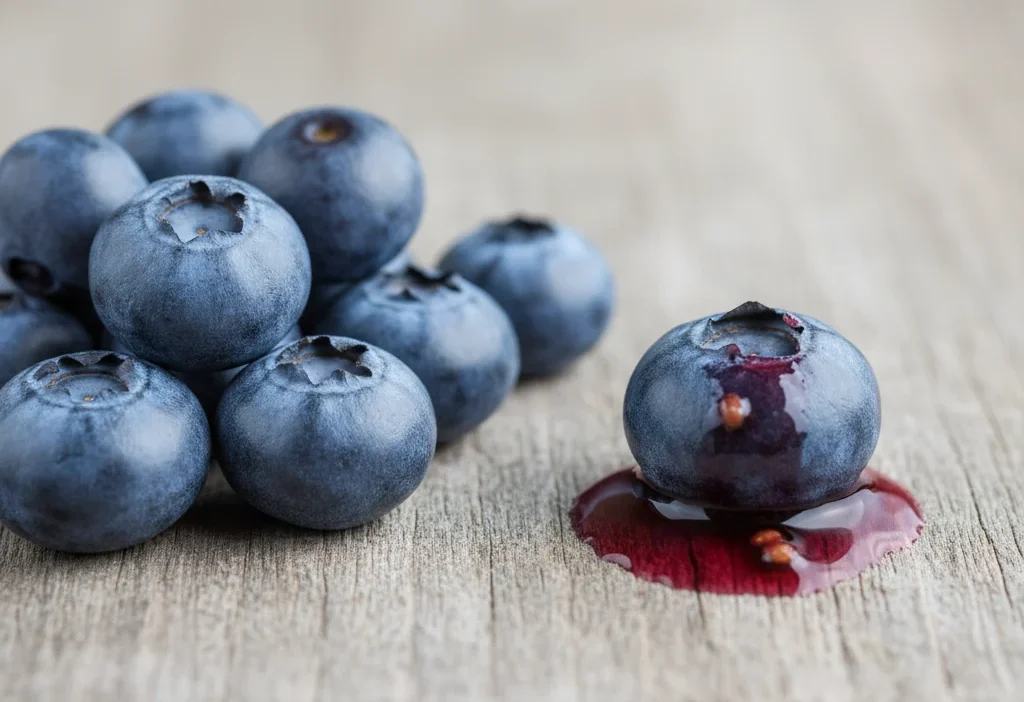
The outer skin of a blueberry appears blue because of a pigment called anthocyanin. This natural pigment changes color depending on pH levels (acidity).
- In slightly acidic light, anthocyanins reflect a blue color.
- When crushed or mixed with something acidic (like lemon juice), they turn purple or even reddish.
So, while the skin looks blue, the juice inside is purple.
That’s why your blueberry smoothie or muffin batter often turns purple!
🍰 Common Mistakes and Myths About Blueberries
Let’s clear up some confusion people often have about blueberry colors.
| Mistake | Why It’s Wrong | Correct Explanation |
|---|---|---|
| “Blueberries are truly blue like the sky.” | Their blue is a visual trick caused by light reflection. | They only appear blue; the pigment itself is purple. |
| “All blueberries look the same.” | Some varieties are darker or redder inside. | Wild blueberries often have more purple tones. |
| “Blueberries stay blue when cooked.” | Heat and acid change their pigment. | That’s why they turn purple or red when baked. |
💡 Remember: Blueberries are called blue, but scientifically, they’re closer to purple.
🧠 When to Say “Blue” (and Be Correct)
You can call blueberries blue when talking about:
- Their outer appearance — “The blueberries look blue in the basket.”
- Their general color name — “I bought some fresh blue berries.”
- In everyday speech, because that’s the accepted word.
✅ Examples:
- “Blueberries are my favorite blue fruit.”
- “She painted a bowl of blue blueberries.”
- “The blueberry jam looked shiny and blue before cooking.”
📘 Memory Trick:
If it looks blue from far away, it’s fine to call it blue.
💜 When to Say “Purple” (and Be Correct)
You can say blueberries are purple when referring to:
- The inside or juice of the fruit.
- The color change when crushed or cooked.
- The scientific color of their pigment.
✅ Examples:
- “The blueberry smoothie turned purple.”
- “My fingers were stained purple after eating blueberries.”
- “The jam looked deep purple after boiling.”
💭 Memory Hack:
When you crush a blueberry and it stains your fingers, that color — not the skin — shows its true color.
89+Ten of Pentacles Yes or No: Tarot Interpretation for You 2025
🪄 Quick Recap: Blueberries — Blue or Purple?
Let’s sum it up in simple bullet points:
- The skin of blueberries looks blue.
- The juice and pigment inside are purple.
- The color changes depending on light and acidity.
- It’s okay to call them blue — that’s their name.
- But scientifically, they’re more purple than blue.
🎯 Easy Rule to Remember:
“Blue on the outside, purple on the inside!”
📘 Advanced Tips: The History & Fun Facts About Blueberries
- Name origin: The word blueberry comes from their outer blue appearance, even though the true pigment is purple.
- Pigment fact: Anthocyanins are also found in purple cabbage, grapes, and cherries.
- Cultural fun fact: Some languages don’t even separate blue and purple — they use one word for both!
- In cooking: Blueberries can turn pink or purple when baked because heat changes their natural dyes.
💡 Pro Tip:
If you’re writing an essay or doing a science project, call blueberries “blue-colored fruits with purple pigment.” That’s both accurate and clear.
🧩 Mini Quiz: Test Your Knowledge!
Fill in the blanks with blue or purple.
- The sky is ______.
- The inside of a blueberry looks ______.
- My smoothie turned ______ after blending blueberries.
- Jeans are usually ______.
- Grapes are mostly ______.
- Blueberry muffins often look ______ after baking.
- My fingers turned ______ after touching blueberry jam.
Answers: 1. Blue, 2. Purple, 3. Purple, 4. Blue, 5. Purple, 6. Purple, 7. Purple.
❓ FAQs About Blueberries’ Color
1. Why do blueberries look blue but stain purple?
Because of anthocyanin pigment — it changes color based on light and acidity.
2. Are blueberries naturally blue?
Not exactly. Their skin reflects blue light, but their actual pigment is purple.
3. Do all blueberries have the same color?
No. Wild blueberries are usually darker and more purple than farmed ones.
4. Why do cooked blueberries turn red or purple?
Heat and acids (like lemon or vinegar) make anthocyanins shift toward purple or red.
5. What color should I call them in art or writing?
You can say blue for general description, or purple for accuracy — both are accepted!
🌈 Conclusion
So, are blueberries blue or purple? The answer is — both!
Their skin looks blue, but their juice is purple because of natural pigments. The name “blueberry” comes from how they look, not their true chemical color.
Next time you eat blueberries, notice their beautiful shades — blue on the outside, purple inside. Understanding small details like this makes learning about colors (and language) fun!
Keep exploring the world with curiosity — every question you ask helps you grow smarter and sharper.

Marianne Solace is a lifestyle and personal-growth writer for WordContrast.com. Her work blends inspiration with practicality, offering thoughtful insights on wellness, creativity, and mindful living. When she’s not writing, Marianne enjoys journaling with a cup of coffee, exploring art museums, and helping others find balance through the written word.