Many people ask themselves, “Am I depressed or lazy?” because both feelings can look very similar. You might feel tired, unmotivated, or unable to finish tasks. But the truth is: depression and laziness are not the same, and understanding the difference can help you feel more confident, clear, and in control.
What Does “Depressed” Mean?
Depressed describes a mental or emotional state.
It’s not about being slow or careless — it’s about feeling deep sadness, emptiness, worry, or hopelessness for many days or weeks.
Depression affects both the mind and body.
People may want to do things but cannot because they feel drained.
Part of Speech: Adjective
Simple Examples of “Depressed”
- She feels depressed because nothing makes her happy anymore.
- I want to work, but I’m too depressed to get out of bed.
- He looked depressed after hearing the sad news.
Mini Story:
Imagine your favorite toy breaks, and no new toy makes you smile for weeks.
That heavy, long-lasting sadness is similar to being depressed.
What Does “Lazy” Mean?
Lazy means someone doesn’t want to work or put in effort, even when they have the energy and ability.
It’s a choice, not an emotional illness.
Part of Speech: Adjective
Examples of “Lazy”
- She is feeling lazy and doesn’t want to clean her room.
- I skipped my homework today because I was lazy.
- He was too lazy to get up and switch off the light.
Mini Story:
Imagine you have homework, but instead, you scroll your phone because you simply don’t feel like doing it.
That is being lazy.
The Key Difference Between “Depressed” and “Lazy”
Here is the simple rule:
Depressed = Can’t do it because the mind feels heavy.
Lazy = Don’t want to do it even though you can.
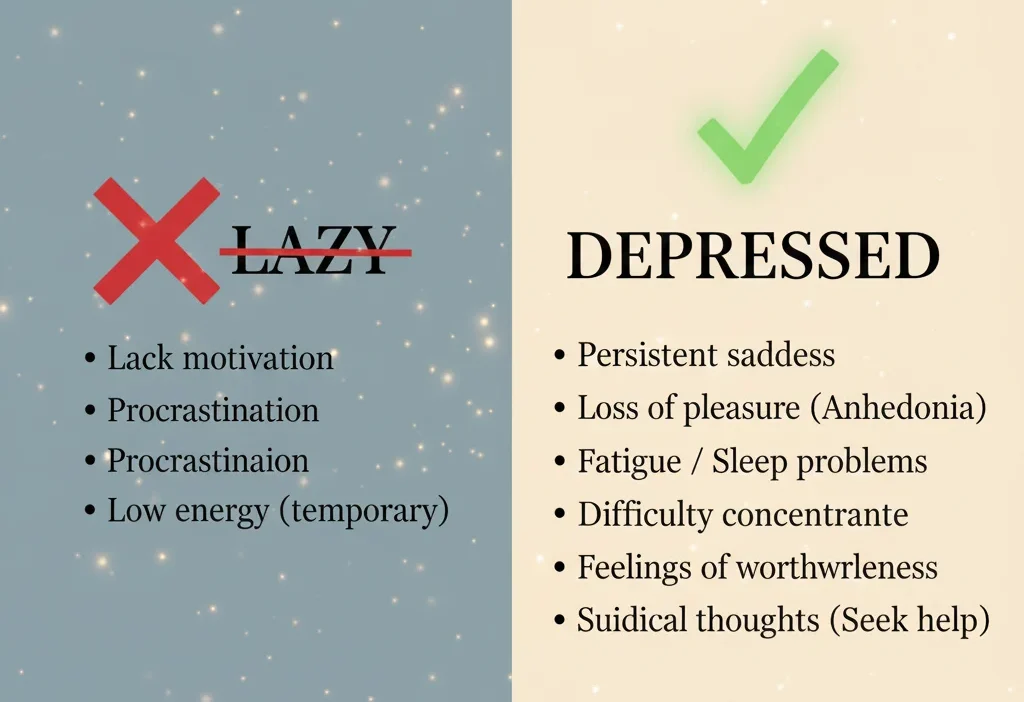
Comparison Table: Depressed vs Lazy
| Feature | Depressed | Lazy |
|---|---|---|
| Meaning | Deep sadness or emotional struggle | Not wanting to work or make effort |
| Control | Hard to control | A personal choice |
| Duration | Lasts days or weeks | Temporary or moment-to-moment |
| Energy | Low energy, tired, numb | Has energy but avoids work |
| Example | “I want to study but can’t.” | “I can study but don’t want to.” |
Quick Tip to Remember
If you want to do something but feel unable, it’s closer to depression.
If you can do something but simply avoid it, it’s laziness.
Common Mistakes and How to Avoid Them
❌ Mistake 1:
“I’m probably just lazy, even though I feel sad every day.”
✔ Correct:
“I might be depressed because my sadness lasts a long time.”
Why?
Laziness doesn’t last for weeks and isn’t painful.
❌ Mistake 2:
“I’m depressed because I don’t want to clean my room today.”
✔ Correct:
“I’m just feeling lazy today.”
Why?
Being lazy for a few hours is normal for everyone.
❌ Mistake 3:
“I can’t focus, so I must be lazy.”
✔ Correct:
“I can’t focus even when I try. That may be depression.”
When to Use “Depressed”
Use depressed when someone feels:
- Very sad for many days
- Tired even after resting
- Unable to enjoy things
- Hopeless or empty
- Low energy without reason
- Unable to finish tasks even when they want to
Example Sentences
- I feel depressed and don’t enjoy anything anymore.
- She tries to smile, but she is still depressed.
- He feels depressed even though nothing bad happened.
- I wanted to go out, but I was too depressed to move.
- They helped their friend who looked depressed.
When to Use “Lazy”
Use lazy when someone:
- Has energy but avoids tasks
- Chooses comfort over work
- Puts off responsibilities
- Doesn’t feel like doing anything
- Prefers fun instead of effort
Example Sentences
- I didn’t fold my clothes because I was lazy.
- He was too lazy to walk to the kitchen.
- She feels lazy on weekends.
- I didn’t do homework because I felt lazy today.
- He is lazy about cleaning his car.
Memory Hack
Lazy = Maybe Later.
Lazy people delay tasks simply because they don’t feel like doing them.
Quick Recap: Depressed vs Lazy
- Depressed: emotional pain, heavy sadness, low energy
- Lazy: avoiding effort even when you can do it
- Depressed = can’t, Lazy = don’t want to
- Depression lasts longer and feels heavy
- Laziness is temporary and light
Advanced Tips (Optional)
Origin
- Depressed comes from Latin “depressus,” meaning pressed down — which is exactly how it feels.
- Lazy comes from Old English “lēsē,” meaning weak, slow, or idle.
Formal Writing
In essays or exams, use depressed only for emotional or mental states.
Use lazy for personal behavior or habits.
Online Writing
Mixing them can give the wrong meaning.
Calling someone “lazy” when they’re actually depressed can be hurtful and inaccurate.
Mini Quiz
Choose depressed or lazy:
- She wants to study but feels too ______ to try.
- I didn’t wash the dishes because I felt ______ today.
- He has been sad all week and doesn’t know why. He feels ______.
- I could clean my room, but I’m feeling a bit ______.
- She stopped enjoying her hobbies because she is ______.
- I skipped my homework because I was ______.
- He can’t explain why he has no energy. He may be ______.
5 FAQs
1. How do I know if I’m depressed or just lazy?
If you want to do things but feel unable, it’s likely depression. If you can do things but ignore them, it’s laziness.
2. Can depression feel like laziness?
Yes. Depression can make you tired, slow, and unmotivated — which can look like laziness.
3. Does laziness last long?
No. Laziness is short-term. Depression stays for weeks or months.
4. Should I call someone depressed if they look lazy?
No. You don’t know how they feel inside. Be kind and ask how they are.
5. Can I be both depressed and lazy?
Yes. A person can feel depressed and have lazy habits at the same time.
Conclusion
Understanding the difference between “am I depressed or lazy” is important because both feelings look similar but come from very different reasons. Depression comes from emotional struggles, while laziness comes from avoiding effort. Now that you know the meanings, examples, and correct usage, you can confidently choose the right word every time.
Keep learning, keep practicing, and remember — improving your English is a journey, and you’re doing great.

Marianne Solace is a lifestyle and personal-growth writer for WordContrast.com. Her work blends inspiration with practicality, offering thoughtful insights on wellness, creativity, and mindful living. When she’s not writing, Marianne enjoys journaling with a cup of coffee, exploring art museums, and helping others find balance through the written word.